The first steps of diplomacy: The correspondence between Timur and Charles VI
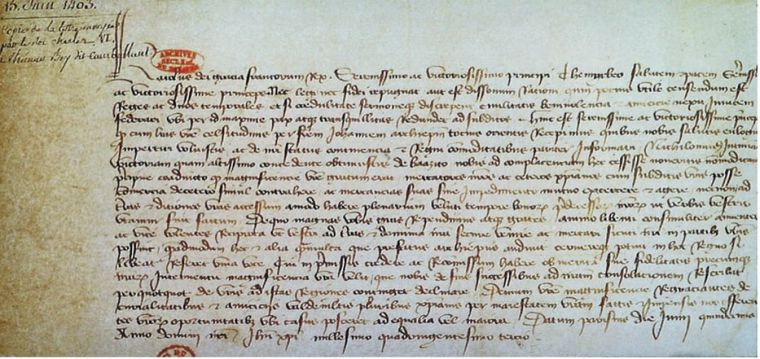
At the end of the 14th century, the correspondence between the great commander Amir Timur and King Charles VI of France, along with the memoirs of the Vatican envoy Ivan Grinlon about Timur’s court, are presented at the Center for Islamic Civilization in Uzbekistan. These documents represent not only a unique chapter in the history of diplomacy but also invaluable sources that introduce our nation’s scientific and cultural heritage to the world.
In the “Second Renaissance” section of the Center’s museum, early Islamic sources, medieval scholars’ manuscripts, and rare documents from the Timurid era are brought together in one space.
In the exhibition dedicated to the era of Amir Timur, every aspect of the sovereign’s activity state administration, domestic policy, and international relations is presented on a scholarly basis. Among the displayed materials are decrees, letters, and royal correspondences written in the Arabic script. One of them is a decree granted by Amir Timur to the descendants of the sayyids of Khwarazm, reflecting the great ruler’s profound respect for scholars.
“Each era has its own laws: over time, the number of artifacts decreases. Yet the survival of original sources from the period of Amir Timur is a great fortune for history”, says Sanjar G‘ulomov, Senior Research Fellow at the Institute of Oriental Studies, Academy of Sciences of Uzbekistan.
The most captivating part of the exhibition features the correspondence between Amir Timur, King Charles VI of France, and the Vatican. Written in 1402, these letters are among the earliest examples in the history of world diplomacy. Accompanying them is the Vatican envoy Ivan Grinlon’s work “Memoirs on the Court of Amir Timur”, which provides detailed information about court life, state governance, and international relations.
These documents show that Amir Timur was not only a great military leader but also a statesman with exceptional diplomatic skill. He established active political relations with France, the Vatican, China, India, and several other nations.
It should be noted that many of the exhibits displayed in the museum are original, centuries-old artifacts that have been carefully preserved. As previously reported, the correspondence between Amir Timur and King Charles VI of France was expected to arrive in Uzbekistan, and now these historic documents have rightfully taken their place in the museum’s collection. Moreover, with the help of modern technology, visitors can view the manuscripts digitally or explore them interactively.
“Sayeh”: Uzbekistan harmoniously combines the Great Heritage of the Silk Road with Modern Infrastructure
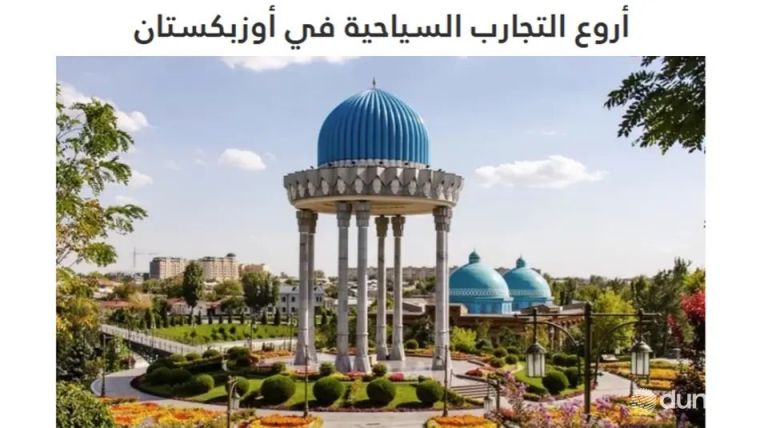
Articles highlighting Uzbekistan’s unique historical and cultural heritage and the dynamic development of its modern tourism infrastructure have been published on the leading Arab tourism portal “Sayeh”, reports Dunyo IA.
In an article under the headline “Samarkand – A Rich History and a Modern Tourism Experience”, particular attention is devoted to the pearl of the Great Silk Road, inscribed on the UNESCO World Heritage List as “Samarkand – Crossroads of Cultures”. The publication provides a detailed account of the Registan Square ensemble, the Gur-e-Amir Mausoleum, the Ulugh Beg Observatory, the Bibi-Khanym Mosque and the Shah-i-Zinda Complex, emphasizing that the unique ancient architecture and blue glazed mosaics preserve the memory of the development of world science, politics and art. At the same time, the article notes that the dynamic development of hotel facilities, transport infrastructure and tourism services is making visits increasingly comfortable.
In the publication “The Most Remarkable Tourism Experiences in Uzbekistan”, the article highlights a comprehensive approach to travelling across the country. A visit to Samarkand is recommended to be combined with trips to Bukhara, with its Poi-Kalyan Ensemble and Ark Citadel, as well as Khiva, home to the open-air museum of Ichan-Kala. The capital, Tashkent, adds the dynamism of a metropolis and the distinctive architecture of its metro, while the mountainous regions of Zaamin and the Tien Shan offer opportunities for ecotourism.
Publication concludes that the key appeal of Uzbekistan as a tourist destination lies in the harmonious combination of its rich historical heritage with the everyday life of modern cities. The country’s renowned hospitality, distinctive national cuisine with its traditional plov-making traditions, the vibrant atmosphere of Eastern bazaars and developing craft workshops give travellers an authentic local experience. The systematic modernization of infrastructure, expanding accommodation options and convenient transport connections make Uzbekistan an ideal destination for international tourists seeking to combine exploring history, immersing themselves in culture and enjoying nature.
