The President of Uzbekistan calls for further expansion of practical cooperation within the CIS
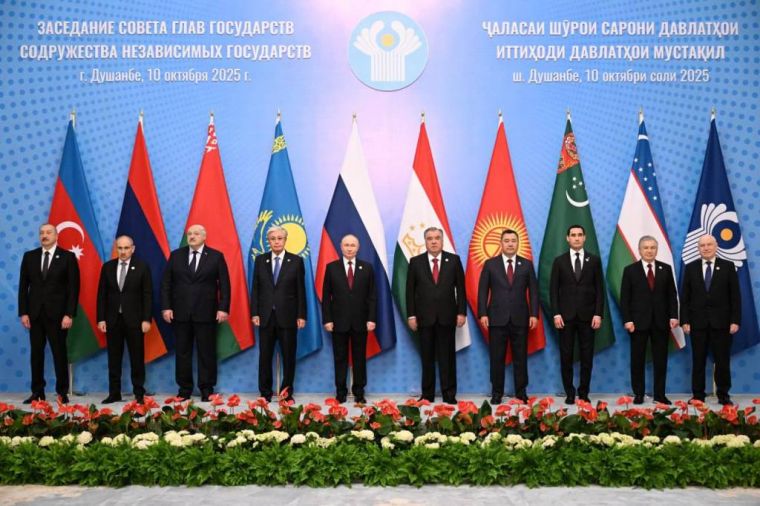
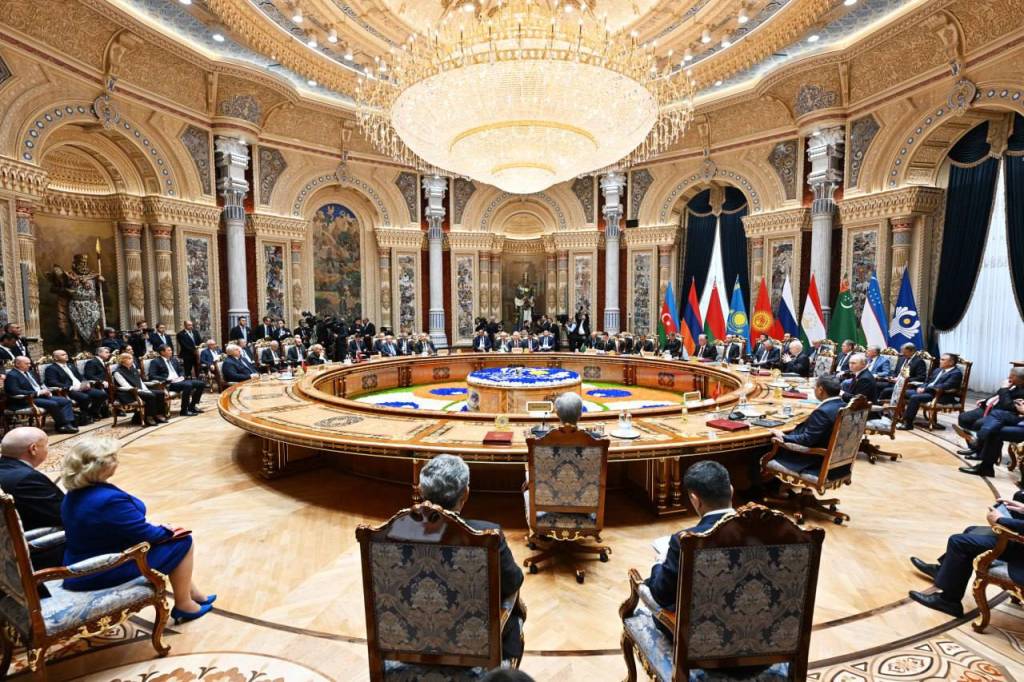
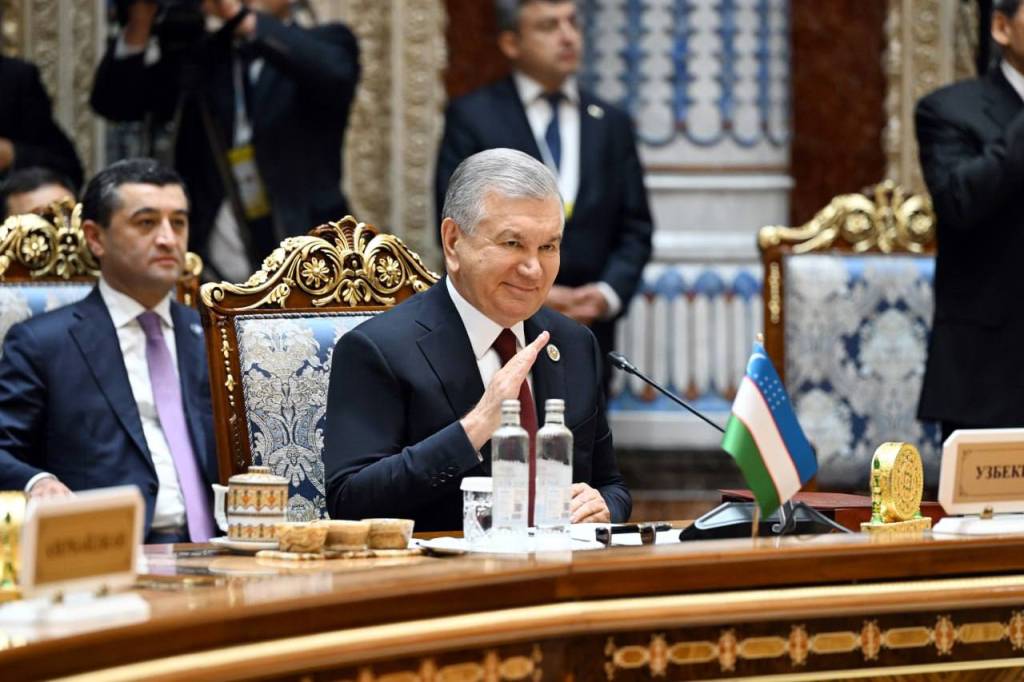
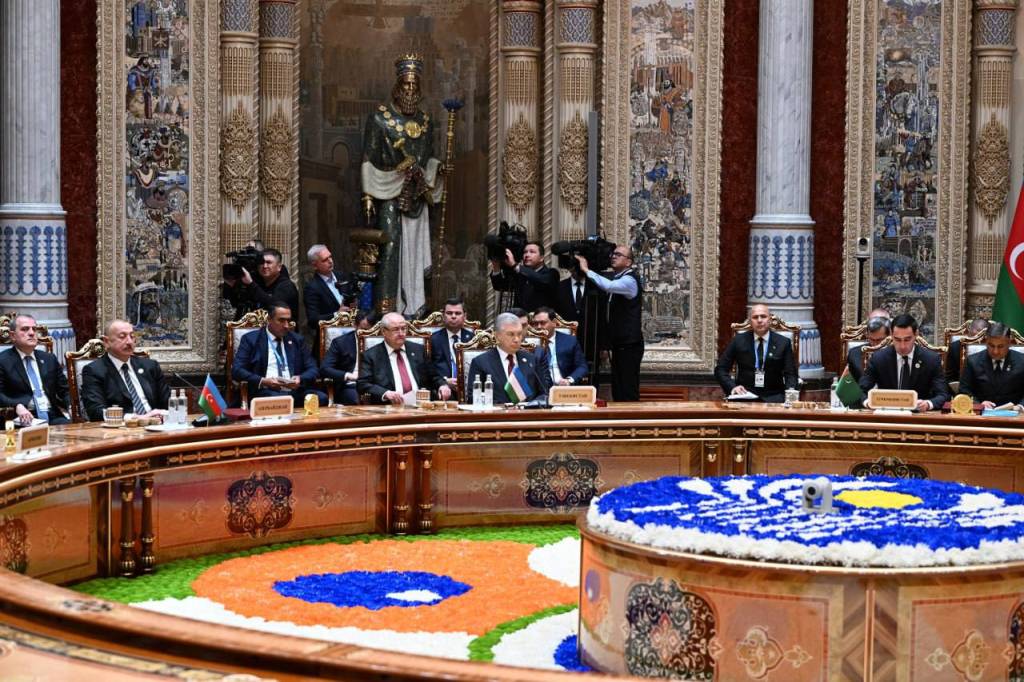
On October 10, the President of the Republic of Uzbekistan Shavkat Mirziyoyev took part in the regular meeting of the Council of Heads of State of the Commonwealth of Independent States (CIS), held in Dushanbe.
The summit, chaired by the President of the Republic of Tajikistan Emomali Rahmon, was attended by the President of the Republic of Azerbaijan Ilham Aliyev, the President of the Republic of Belarus Alexander Lukashenko, the President of the Republic of Kazakhstan Kassym-Jomart Tokayev, the President of the Kyrgyz Republic Sadyr Japarov, the President of the Russian Federation Vladimir Putin, the President of Turkmenistan Serdar Berdimuhamedov, the Prime Minister of Armenia Nikol Pashinyan, and CIS Secretary-General Sergey Lebedev.
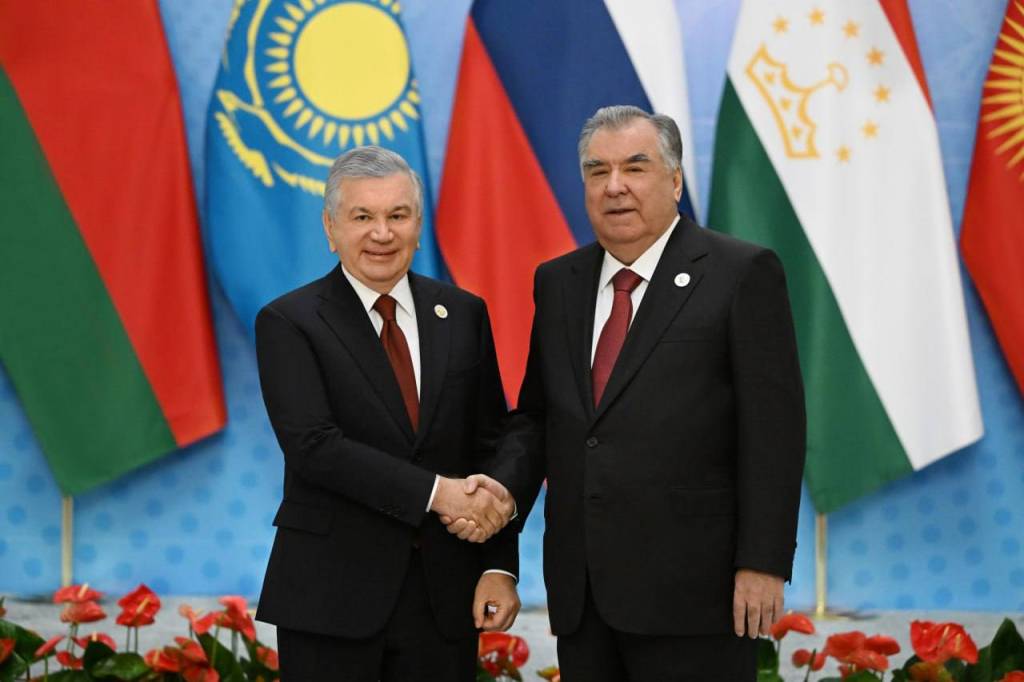
The agenda focused on pressing issues related to strengthening and expanding practical cooperation within the Commonwealth.
At the beginning of his address, the President of Uzbekistan noted that despite the unpredictable developments in global politics and the economy, as well as the declining role of international institutions, the CIS continues to demonstrate resilience, efficiency, and relevance.
Thanks to mechanisms and partnerships established over decades, the Commonwealth maintains close cooperation across a wide range of economic, social, and humanitarian areas.
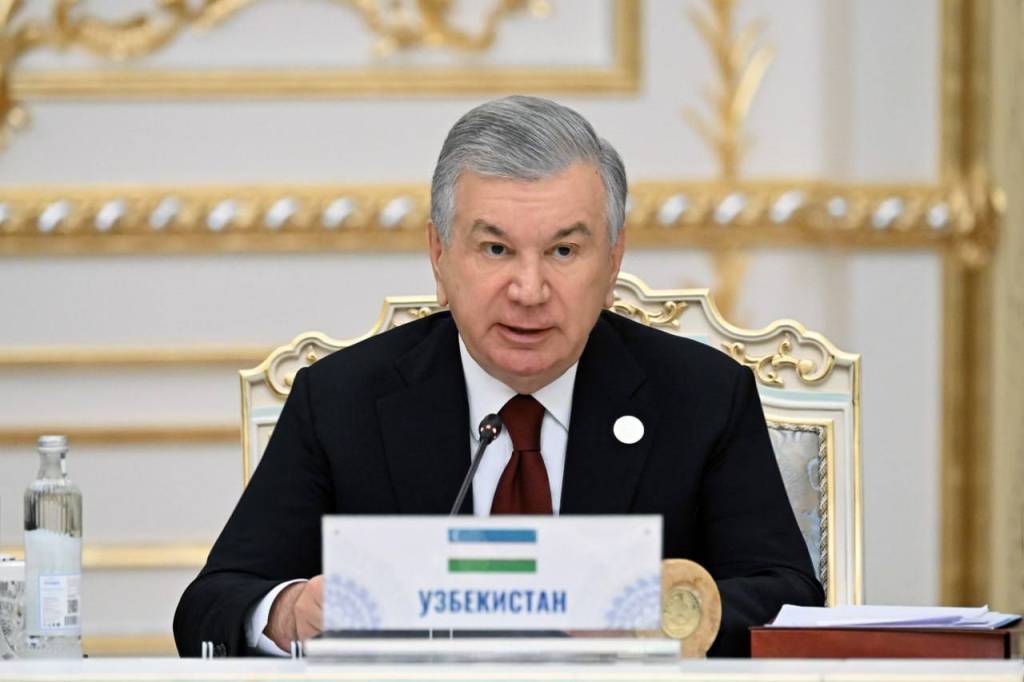
“We are interested in further strengthening cooperation within the CIS and enhancing the effectiveness of practical interaction with countries that are our natural partners”, the President of Uzbekistan said.
The Head of State then put forward several proposals and initiatives aimed at expanding practical cooperation within the Commonwealth of Independent States.
The unconditional priority of the Organization was defined as the expansion of economic partnership, given the deteriorating situation in the global economy, the rise of protectionism, and emerging challenges to sustainable development.
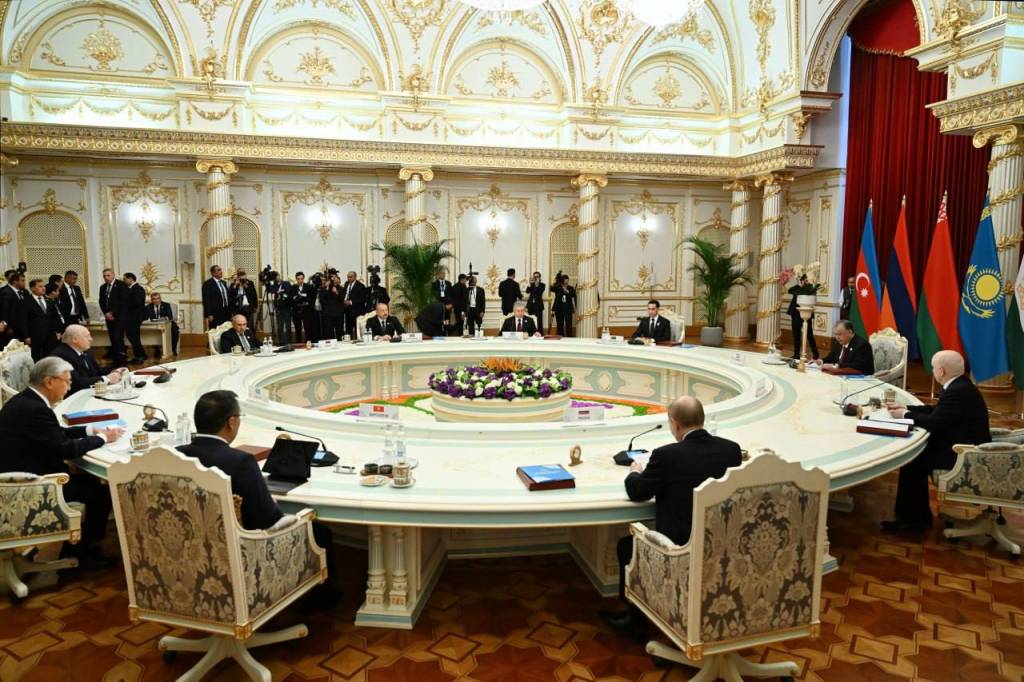
It was noted with satisfaction that Uzbekistan’s trade turnover with CIS partners increased by 11 percent last year and continues to grow this year. Such results are attributed to the deepening of intersectoral cooperation and the growth of mutual investment flows.
To make fuller use of existing resources and maintain the achieved pace and dynamics of cooperation, the President of Uzbekistan proposed focusing joint efforts on the following priority areas.
First, the further creation of favorable conditions for expanding trade turnover.
The need to simplify procedures and requirements for the supply of certain goods, particularly agricultural products, and for access to national markets, including public procurement, was emphasized.
Attention was also drawn to the importance of launching rapid-response mechanisms within the CIS Economic Council to adapt to changes in external market conditions and redirect trade flows. The President underscored the need to accelerate the coordination of draft agreements on technical barriers to trade and mutual recognition of conformity assessment documents.
Second, the deepening of cooperation in the field of transport was identified as a key priority.
It was noted that bottlenecks persist in the CIS transport network, reducing the efficiency of existing corridors. In this regard, the establishment of information and logistics centers integrated across all modes of transport was deemed essential.
Considering the importance of attracting private investment for the modernization of freight transport infrastructure, the President proposed to hold a conference in Uzbekistan on expanding public–private partnership in the transport sector.
Third, stimulating mutual investment growth and supporting cooperation projects.
In this regard, it was proposed to develop a roadmap for supporting the development of special economic and industrial zones, as well as establishing a CIS Venture Platform to deepen cooperation and promote innovative startups with private sector participation. It was also suggested to hold an Innovation Industry Forum in Tashkent next year as part of the INNOPROM exhibition.
Fourth, enhancing energy cooperation.
The President of Uzbekistan noted that several major strategic projects are currently being implemented jointly with CIS partners in the field of traditional and alternative energy, including the construction of a nuclear power plant.
He called for the development and implementation of a long-term Program for the Innovative Development of the Energy Sector across CIS countries.
Fifth, cooperation in the field of digitalization.
The President of Uzbekistan noted that the International Forum “Development of Artificial Intelligence Technologies in the CIS”, held in Samarkand this August, demonstrated the growing mutual interest and potential for cooperation among member states. In this regard, he proposed developing a multilateral Action Plan to deepen practical cooperation in this field.
The Head of State also emphasized the importance of expanding joint projects and programs in the fields of science, education, culture, and the arts.
“Considering the dynamic development of the education sector and labor markets in our countries, we propose drafting a new Interstate Agreement on the Mutual Recognition of Diplomas, Qualifications, and Academic Programs, as well as introducing a Mechanism for the Harmonization of Professional Standards and Qualification Requirements”, the President said.
Uzbekistan also expressed its readiness to host the CIS Youth Forum in Khiva next year, with the agenda to include the establishment of a Youth Innovation Lab aimed at fostering an innovative ecosystem and supporting the creative and intellectual potential of the younger generation.
Addressing issues of regional security, the President of Uzbekistan emphasized the importance of maintaining systematic and close contacts between the foreign ministries and special services. The situation in Afghanistan requires particular attention.
“Uzbekistan remains firmly committed to ensuring long-term peace, stability, and sustainable development in Afghanistan. In this regard, we propose exploring opportunities for joint participation in major investment and infrastructure projects in this country”, the President stated.
In conclusion, Shavkat Mirziyoyev expressed his support for the reappointment of Sergey Lebedev as Secretary-General of the CIS and extended best wishes to the President of Turkmenistan Serdar Berdimuhamedov on assuming the chairmanship of the Organization.
During the meeting, heads of delegations from other CIS member states also delivered their remarks.
The summit concluded with the signing of a package of agreements and decisions aimed at strengthening cooperation across the priority areas within the Commonwealth of Independent States.
UzA
The Uzbek dargah in Istanbul: nearly three centuries of history in light of new research
Research activities are progressing intensively on the international scientific and educational platform of the Islamic Civilization Center in Uzbekistan. Among the scientific and popular publications currently being prepared are studies devoted to highlighting the historical and cultural heritage of the peoples of Central Asia abroad and their centuries-old connections. One such publication is a collection of scholarly articles dedicated to the history of the Uzbek dargah — the “Uzbek khanqah” — located in the Sultantepe area of Istanbul’s Üsküdar district.
The book provides a comprehensive account of the history of the dargah, which for nearly two centuries served as an important stopover and place of accommodation for pilgrims from Central Asia travelling to the Hajj via Istanbul, representatives of the Naqshbandi order, poets and writers, intellectuals, as well as compatriots travelling for various purposes.
An important stop on the Hajj journey
The history of the Uzbek dargah cannot be understood separately from Istanbul’s relations with Central Asia during the Ottoman period. At that time, one of the routes taken by pilgrims travelling from Central Asia to Mecca and Medina for the Hajj passed through Istanbul, where they would stay for a certain period to prepare for the next stage of their journey.
Built in 1752–1753, the Uzbek dargah became an important place for such pilgrims. Travellers rested, worshipped, and prepared for their onward journey there. Over time, the role of the dargah expanded, and it became a permanent gathering place for Uzbeks living in Istanbul and representatives of the Naqshbandi order who had arrived from Central Asia.
Historical sources note that the dargah was open not only to Hajj pilgrims but also to scholars and intellectuals. Various discussions, scholarly and educational gatherings, poetry sessions, and cultural events were held there, and guests were received. More broadly, the Uzbek khanqahs in Istanbul served Central Asian pilgrims as places of accommodation, religious education and enlightenment, as well as cultural and social centers.
The Naqshbandi order and the intellectual environment
The Naqshbandi order occupies a special place in the history of the Uzbek dargah. Drawing on archival sources, the book examines the Sufi activities carried out at the dargah, the lives of its sheikhs, and their participation in public and educational life.
The dargah developed not only as a place of dhikr and worship, but also as an intellectual environment where scholars, poets, and religious figures arriving from Central Asia could meet and exchange ideas. Discussions and debates on various subjects were held there, while literary and educational traditions were also continued.
The scope of the dargah’s intellectual environment is also reflected in the written sources preserved there. In particular, an inscription on the veranda of the khanqah, dated 1182 AH — 1769 CE — and written in Old Uzbek in the Arabic script, reflects its status as a Naqshbandi dargah.
New findings on the waqf history of the dargah
One of the book’s important scholarly contributions is its reassessment, based on archival documents, of information concerning the waqf history and legal status of the Uzbek dargah.
The research has clarified certain details previously presented in scholarly literature. In particular, it has been established that the full name of Sheikh Abdullah, who is mentioned as the first sheikh of the dargah, was Sayyid Sheikh Abdullah Akbar Efendi ibn Asadullah Uzbaki.
At the same time, the view that a separate waqf was established for the dargah at the time of its construction in 1752–1753 has been reassessed on the basis of archival documents. According to the research, a separate waqf for the Uzbek dargah was established in 1788 by al-Hajj Khalil Agha ibn Ahmad Efendi, thereby formalizing the legal status of the dargah. The waqf document records the dargah as a Naqshbandi khanqah and states that it initially served dervishes who had come from the Qalandarkhana quarter of Samarkand. The terms of the waqf were later amended to allow other Naqshbandi dervishes to stay overnight at the dargah as well.
These findings make it possible to understand the Uzbek dargah not merely as a religious structure, but as a historical institution that operated within a defined legal, economic, and social framework.
The sheikhs and the dargah’s role in public life
The book also examines archival records concerning the sheikhs of the dargah. These documents reveal not only their role in the life of the dargah itself, but also their place in maintaining ties among Central Asians in Istanbul.
Archival documents record that in 1797, scholars from Transoxiana who sought refuge in the Ottoman Empire — Sheikh Abdurahim, Sheikh Hamza, Sheikh Muhammad Salim, and Sheikh Abdukarim — stayed with their companions at the Uzbek tekke in Üsküdar. There are also documents from the nineteenth century indicating the role of Sheikh Sulayman Efendi of the dargah in supporting individuals who had arrived from Central Asia.
Such documents show that the Uzbek dargah was not merely a stopover for people arriving in Istanbul from Central Asia, but also served as a social and intellectual center that brought them together.
Economic and cultural activities
The study also examines the economic aspects of the dargah’s internal life. In particular, its production processes, account books, and economic activities are analyzed in separate scholarly articles.
The architectural inscriptions, epigraphic texts, musical heritage, and works of art associated with the dargah have also been studied. This makes it possible to examine the history of the Uzbek dargah not merely as the history of a religious institution, but as that of a multifaceted center reflecting the social, cultural, and economic life of its time.
Some archival documents also contain information about a request made by Sheikh Sulayman Efendi of the dargah for typesetting equipment and other materials needed for printing instruction, as well as records concerning a zawiya established in Jeddah for the use of pilgrims from Balkh, Bukhara, Kokand, and Kashgar.
Its role in the national liberation movement
Another important aspect of the history of the Uzbek dargah is connected with its activities during the Turkish national liberation movement.
The studies included in the book also shed light on the role of the dargah during the final years of the Ottoman Empire and the Turkish War of Independence. In particular, they note that in 1919 a hospital for soldiers of the Turkish National Army was established at the dargah.
Thus, a place that had once served as a stopover for Hajj pilgrims and travellers later became a direct witness to the complex social and political processes that shaped the history of the region.
The contemporary significance of ancestral heritage
Today, the Uzbek dargah in Sultantepe holds special significance for our compatriots visiting Türkiye as a unique cultural heritage site preserved from our forebears of the recent past.
The history of the dargah demonstrates that centuries-old cultural and intellectual ties between Uzbekistan and Türkiye had developed long before the modern stage of relations between the two countries. Formed through pilgrims, scholars, sheikhs, poets, and intellectuals who travelled from Central Asia to Istanbul, these connections encompassed not only religious life but also literature, scholarship, art, trade, and social relations.
From this perspective, studying the history of the Uzbek dargah is important not only for tracing the fate of a single historical monument, but also for understanding the long-standing civilizational ties between Central Asia and the Ottoman world.
Studies included in the book
The forthcoming book brings together scholarly articles devoted to various aspects of the history of the Uzbek dargah. These include Hasan Demirtash’s “a diplomatic and structural analysis of the waqf charter of the Üsküdar Uzbek dargah,” Erkan Ovuch’s “Archival information on the sheikhs of the Uzbek dargah,” Serpil Özcan’s “A Stopover for travellers: the Sultantepe Uzbek dargah,” Umar Faruq Jan’s study on production and economic activities at the dargah, and Umar Köçyiğit’s article on the inscriptions of the dargah.
The volume is further enriched by Marwa Kubra Inja’s study of the role of the Uzbek dargah during the national liberation movements, Melih Sadiq Küçüker’s analysis of family archival documents concerning the activities of Sheikh Ata and Sheikh Najmuddin at the dargah, and Süleyman Ergünar’s research on the musical heritage of the Uzbek dargah.
The publication also includes an article by Rustam Jabborov, Scientific Secretary of the Islamic Civilization Center in Uzbekistan, entitled “An Uzbek landmark in Istanbul.” The article discusses the historical significance of the dargah, its role in the lives of Hajj pilgrims and representatives of the Naqshbandi order, its ties with Central Asia, and its importance today as a cultural heritage site.
Overall, the studies collected in this book are aimed at reassessing and enriching the history of the Uzbek dargah on the basis of a wide range of sources — including archival documents, waqf deeds, letters, records, and materials from private archives — while also introducing new findings into scholarly circulation.
The preparation of such studies at the Islamic Civilization Center in Uzbekistan demonstrates the attention being devoted, within the framework of the Center’s international scientific and educational platform, to the history of Uzbekistan, the heritage of our ancestors, and historical and cultural sources preserved abroad through a new scholarly approach.
