News
Samarkand to Host World Waqf Forum with Experts from Muslim Countries in November
28.09.2026
11067
2 min.
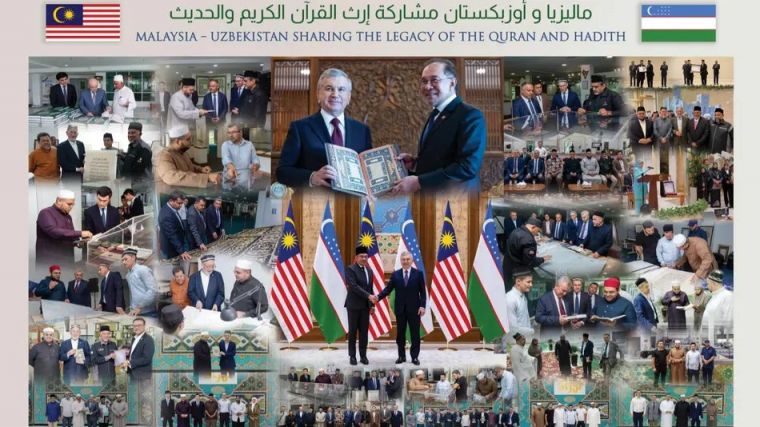
A delegation from the Muslim Board of Uzbekistan, led by Deputy Chairman and Chairman of the Waqf Public Charitable Foundation Zayniddin Eshonkulov, took part in Islamic Economy Week and a regular meeting of the World Waqf Forum in Malaysia, reports Dunyo IA.
The events brought together representatives of the governments of 57 member states of the Organization of Islamic Cooperation, as well as specialists in Islamic finance, zakat and waqf.
The head of the Uzbek delegation outlined reforms in the religious and educational sphere, social support for people in need and large-scale charitable initiatives being implemented in Uzbekistan.
Following the meetings, the sides agreed to exchange experience in waqf and zakat management amid digitalization, improve legislation, strengthen the collection and targeted distribution of funds, and develop the Islamic finance ecosystem.
The Uzbek delegation held talks with representatives of the Malaysian Parliament, the Malaysian Waqf Foundation, the World Zakat and Waqf Forum, the Kedah State Zakat Foundation and the leadership of Albukhary International University.
The sides also agreed to hold the next World Waqf Forum in Samarkand in November. Around 300 government officials and experts from Muslim countries are expected to participate.
The significance of the Islamic Civilization Center and the Imam Bukhari complex, officially opened in Uzbekistan in 2026, was also highlighted.
The delegation also met with Abdul Latif Mirasa, chairman of Malaysian publishing house Nasirul Quran. The meeting resulted in the signing of a memorandum of understanding providing for the exchange of experience and joint implementation of charitable projects.
To mark the 35th anniversary of Uzbekistan’s independence, the publishing house donated 20,000 copies of the book The Quran and Translation of Its Meanings into Uzbek to the Uzbek people through the Waqf Foundation.
SHARE INFORMATION ON SOCIAL NETWORKS



 Iman
Iman  Prayer
  Fasting
  Zakat
Zakat  Haj
Haj  Qur`an
  Lessons of Islam
  Contact