1,000 Riyal Fine Imposed for Feeding Pigeons near Masjid al Haram
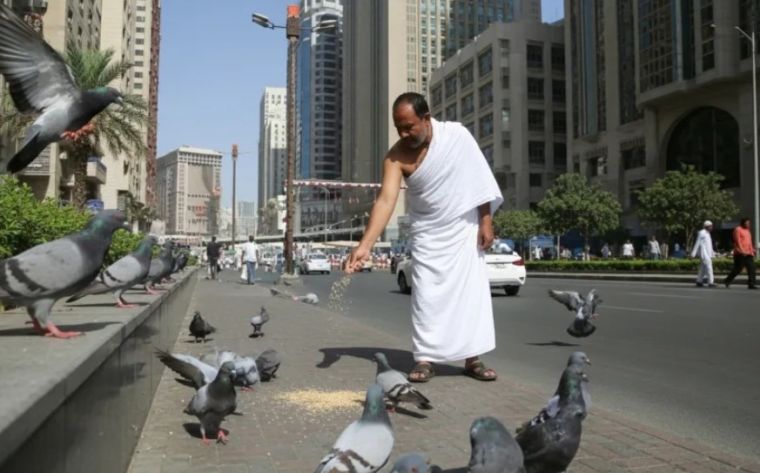
The Secretariat of the Holy Capital has implemented a strict ban on feeding pigeons in Mecca and Medina, with violators facing fines of 1,000 Saudi riyals.
The new regulation, announced to protect public health and maintain environmental cleanliness in Islam’s two holiest cities.
The secretariat has established continuous monitoring programs to enforce the ban and is encouraging citizens and visitors to participate in reporting violations.
Individuals can photograph offenders and submit evidence to local police, creating a community-based enforcement system.
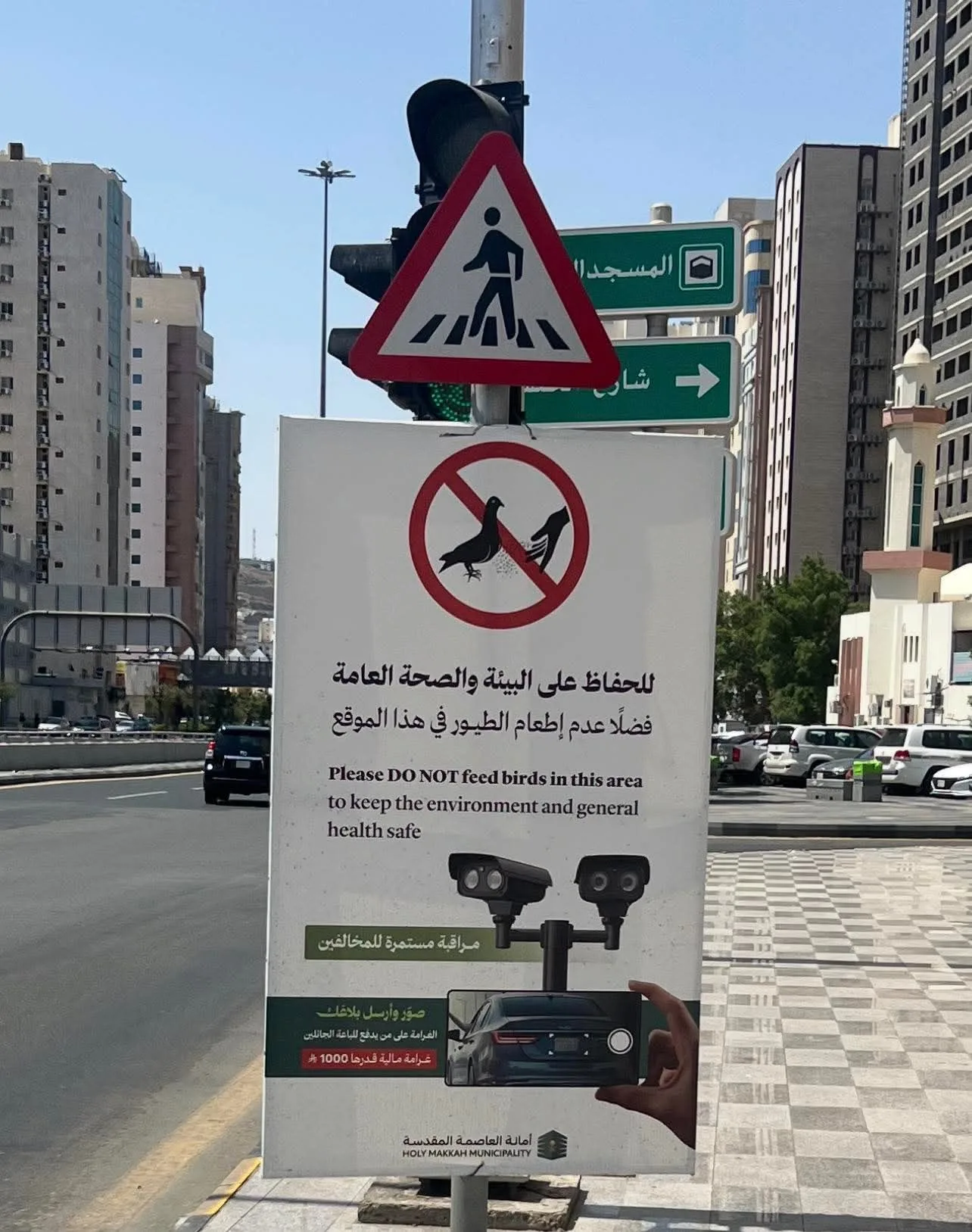
Officials cite concerns about disease transmission, property damage, and environmental pollution as primary reasons for the prohibition.
The initiative represents the latest in a series of measures to enhance urban quality and public health standards in the holy cities, which host millions of pilgrims annually.
Previous regulations have addressed street vending, waste management, and public behavior to preserve the sanctity and cleanliness of the religious sites.
Municipal officials emphasized that the ban particularly targets areas around the Grand Mosque and Prophet’s Mosque, where large pigeon populations have historically gathered due to public feeding.
Islamic Civilization Center in Uzbekistan Named Symbol of Third Renaissance
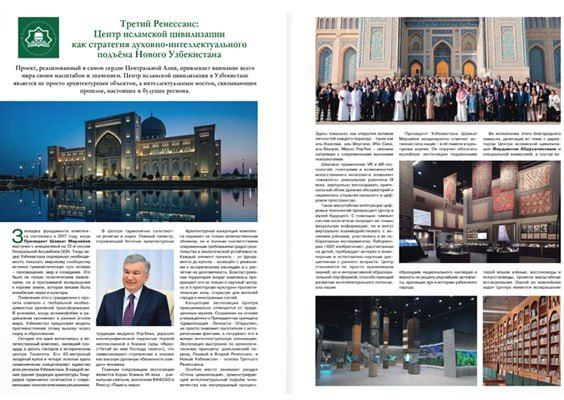
The autumn issue of Russia’s leading magazine “Tourism and Culture Industry” has published an extensive article on the activities of the Islamic Civilization Center in Tashkent, reports Dunyo IA.
The publication describes the 10-hectare complex, featuring a 65-meter azure dome and built on the initiative of President Shavkat Mirziyoyev, as a symbol of the era of the Third Renaissance. Its architecture combines Timurid traditions with modern technological solutions, while the centerpiece of the exhibition is the 7th-century Uthman Quran manuscript, included in UNESCO’s Memory of the World international register.
The magazine provides a detailed overview of the museum concept, “Civilization – Personalities – Discoveries,” which covers historical periods from the pre-Islamic era to New Uzbekistan.
The publication also highlights the center’s key innovations, including the interactive “Wall of Civilizations,” virtual and augmented reality technologies, artificial intelligence and the “1,001 Inventions” children’s laboratory.
Particular attention is given to the center’s international cooperation and research infrastructure. Through systematic cooperation with major international auction houses, private collectors and the World Society for the Study, Preservation and Popularization of the Cultural Heritage of Uzbekistan (WOSCU), more than 1,000 unique artefacts and manuscripts have been returned to Uzbekistan.
According to Tourism and Culture Industry, the project’s international recognition is reflected in the Islamic Civilization Center being included among the “World’s Most Beautiful Museums 2026” by the international Prix Versailles awards, as well as in coverage by prominent international publications including Smithsonian Magazine, BBC Travel and National Geographic.