Uzbekistan and Afghanistan entrepreneurs’ meeting
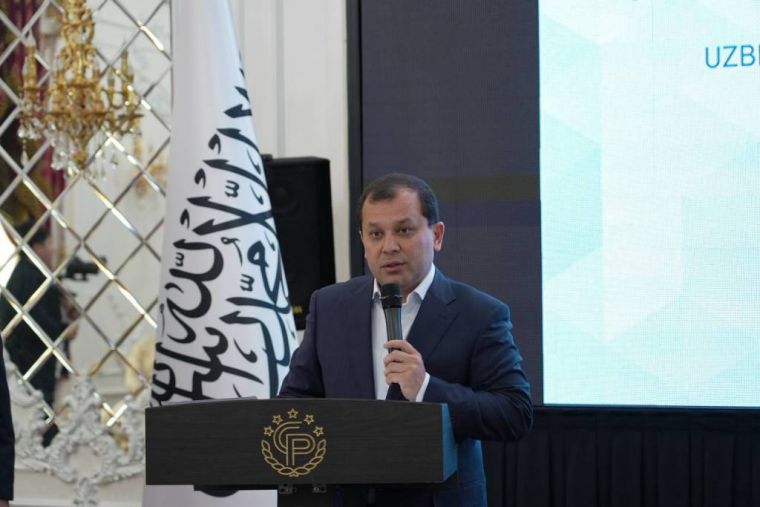
A business meeting of representatives of the private sector of Uzbekistan and Afghanistan took place in Tashkent on the initiative of the Chamber of Commerce and Industry of Uzbekistan.
Eighty entrepreneurs from Afghanistan and more than 200 representatives of companies from Uzbekistan attended the event.
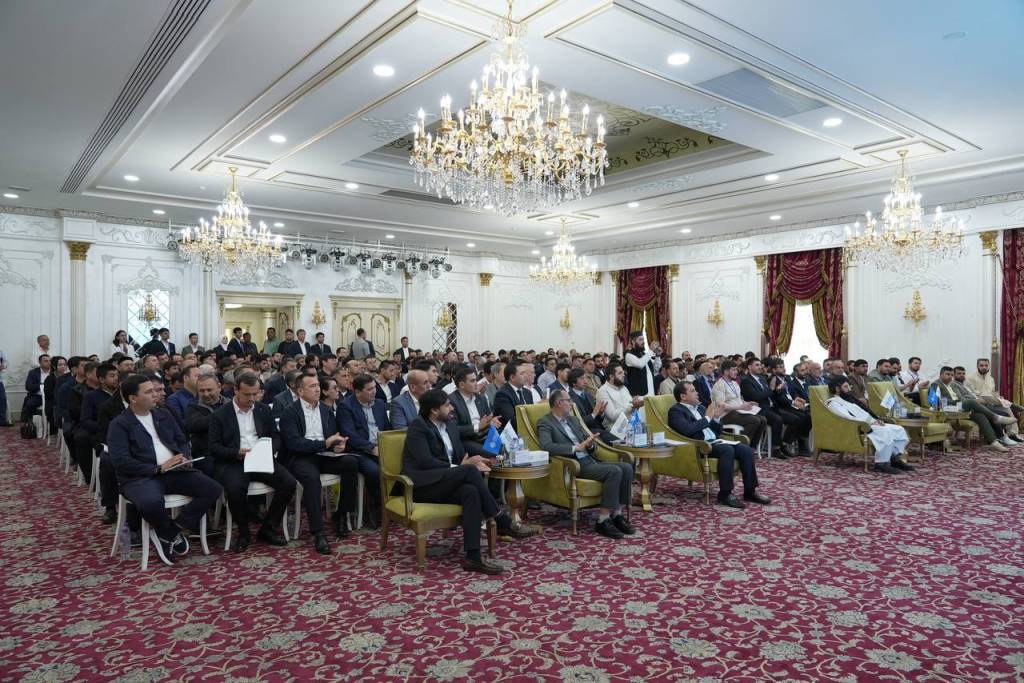
According to the Chamber of Commerce and Industry, the meeting was organized in seven areas, including the food industry, building materials, pharmaceuticals, textiles, logistics, and auto parts.
In 2025, over 120 Uzbekistan companies participated in events in Kabul and Mazar-i-Sharif, resulting in contracts worth $60 million. More than 45 agreements have been reached as a result of the business forum held in Kabul in August.
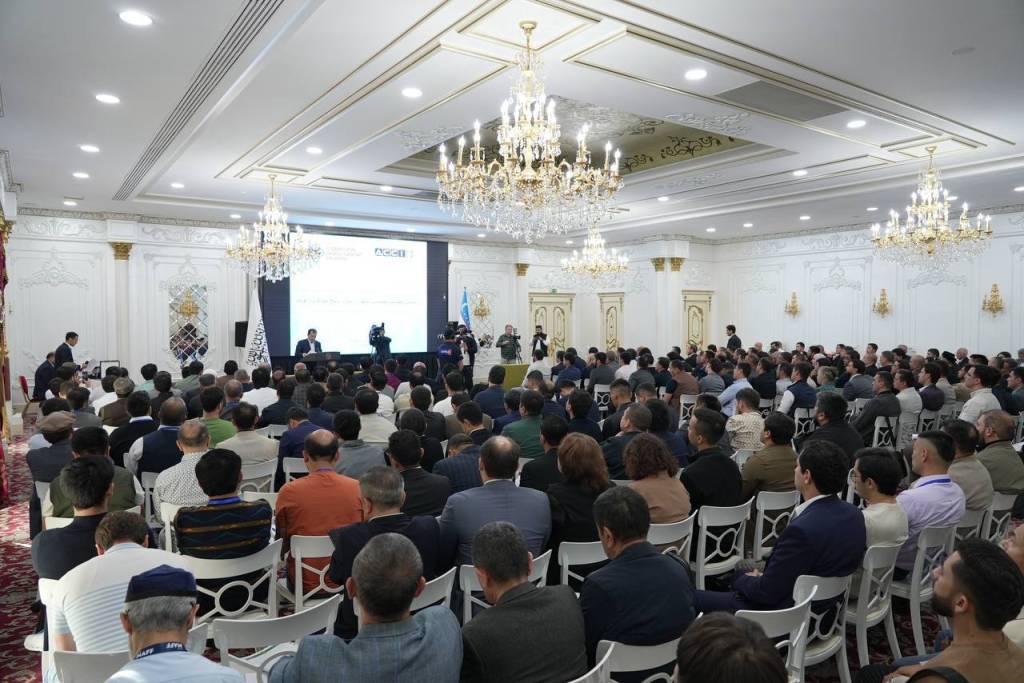
The event also included B2B negotiations. The parties considered several key issues, including expanding trade cooperation, implementing joint projects, discussing investment initiatives, and increasing export potential in the Afghan market.
The trading houses of Uzbekistan are operating in the Afghan market. In particular, a trading house in Kabul has a showroom and a warehouse, presents building materials and food products. The trading house in Mazar-i-Sharif specializes in pharmaceutical and electrical products.
B. Khudoyberdiyev, UzA
Uzbekistan to widely celebrate the 1,200th anniversary of Hakim Termizi’s birth

Uzbekistan continues to consistently pursue a state policy aimed at the in-depth study, preservation, and broad promotion of the rich scholarly and spiritual heritage of its great scholars. As a logical continuation of these efforts, on 24 July 2026, the President of the Republic of Uzbekistan signed the Resolution “On the wide celebration of the 1,200th anniversary of the birth of our great compatriot, the distinguished scholar of hadith and Sufism, Hakim Termizi.” The Resolution provides for a comprehensive set of measures to promote in-depth research into Hakim Termizi’s scholarly legacy, expand public access to his works, and promote them internationally.
Hakim Termizi, who lived and worked in the ninth century, is regarded as one of the greatest scholars of Hadith, Qur’anic exegesis, and Sufism. His works have played a significant role in shaping Islamic spirituality, ethics, the concept of the ideal human being, and intellectual thought, earning enduring recognition throughout the Muslim world for centuries.
In accordance with the Resolution, an international scientific conference entitled “The contemporary significance of Hakim Termizi’s scholarly and spiritual legacy” will be held in the city of Termez in November 2026. Bringing together leading scholars from Uzbekistan and abroad, the conference will comprehensively examine the scholar’s intellectual heritage and his contribution to the development of Hadith studies, Sufism, and Islamic thought. The Resolution also provides for the publication of scholarly annotated academic translations of Hakim Termizi’s works, including Nawādir al-Uṣūl and Baḥr al-Tafsīr, as well as other sources related to his legacy, in Uzbek and foreign languages. These initiatives will further enhance international scholarly awareness of Hakim Termizi’s intellectual heritage.
As part of the Resolution, a series of publications dedicated to Hakim Termizi’s scholarly legacy will be prepared and published throughout 2026. To encourage the younger generation to study the scholar’s works in greater depth, the “Expert on the works of Hakim Termizi” competition will be organized among students of religious educational institutions in cooperation with the Muslim Board of Uzbekistan, with outstanding participants receiving awards. In addition, a national kurash tournament dedicated to Hakim Termizi’s memory will be held under the slogan “Mardlar Maydoni” to commemorate the 1,200th anniversary of his birth. This initiative is intended to promote national values, spirituality, and sport in a harmonious and integrated manner.
The Resolution represents another significant step toward preserving the legacy of Uzbekistan’s great ancestors and passing it on to future generations, while also promoting to the international community Uzbekistan’s invaluable contribution to the development of Islamic civilization. It creates new opportunities for the broader study and promotion of Hakim Termizi’s rich scholarly and spiritual heritage, recognizing it not only as a national treasure but also as an integral part of humanity’s shared intellectual and spiritual legacy.
