The site is working in test mode!
04 September, 2026   |   22 Rabī‘ al-awwal, 1448

Tashkent city
Fajr
04:30
Sunrise
05:52
Dhuhr
12:22
Asr
16:57
Maghrib
18:55
Isha
20:13
Bismillah
04 September, 2026, 22 Rabī‘ al-awwal, 1448

The Muslim World League

15.10.2025   117984   5 min.
The Muslim World League

The Muslim World League (MWL) is an independent international organization comprising members from various Islamic countries and sects. Headquartered in Makkah, its mission is to clarify the true image of Islam and foster friendship among peoples.

Establishment:
The MWL was established by a resolution issued by the General Islamic Conference held in Makkah on May 18, 1962 (corresponding to 14 Dhu al-Hijjah 1381 AH).

The MWL Serves as a Member in:

  • United Nations (UN): The MWL serves as an observer member in the Economic and Social Council, among international non-governmental organizations holding consultative status.
  • Organization of Islamic Cooperation (OIC): The MWL serves as an observer, participating in summit conferences, meetings of foreign ministers, and all other conferences convened by the organization.
  • United Nations Educational, Scientific and Cultural Organization (UNESCO): The MWL serves as a member.
  • United Nations Children’s Fund (UNICEF): The MWL serves as a member.

Its Charter:
We, the members of the Muslim World League, representing the MWL with faith and conviction, pledge to Almighty Allah to:

  • Call upon all nations to work toward achieving the happiness and welfare of humanity, ensuring social justice for all, and fostering the best possible human society.
  • Bear witness before Allah that we do not seek to harm or interfere in the affairs of others, nor do we desire to dominate or exert control over anyone.
  • Strive to unify Muslims and eliminate the causes of division within Islamic societies across the world.
  • Promote and encourage all forms of benevolence.
  • Declare that Islam does not endorse populism or racism.
  • Unite our efforts to achieve these goals in a constructive and principled manner.
  • Utilize all available spiritual, material, and moral means to fulfill the aspirations outlined in this charter.

The MWL’s Objectives and Methods of Implementation:
The MWL pursues its goals through means that fully comply with Islamic law, including the following:

  • Introduce Islam and its tolerant values as presented in the Holy Qur’an and the Sunnah.
  • Consolidate the principles of centrism and moderation within the consciousness of the Muslim Ummah.
  • Address and resolve issues facing the Muslim Ummah and prevent factors that cause conflict and discord.
  • Emphasize civilizational rapprochement and promote a culture of dialogue.
  • Address the concerns of Muslim minorities and resolve their issues in accordance with the constitutions and legal frameworks of the countries in which they reside.
  • Utilize the Hajj season as an opportunity to facilitate meetings among scholars, intellectuals, and organizational leaders to provide scientific and practical solutions for raising the standards of Muslims worldwide.
  • Preserve the Islamic identity of the Ummah, strengthen its global standing, and enhance its unity.

Financial Management:
The Muslim World League relies on its endowments for financial management.
Investments derived from these endowments constitute a major source of funding for the organization.

The General Secretariat:
The General Secretariat of the Muslim World League serves as the executive arm of the organization. It oversees the day-to-day operations of the League and implements the policies and resolutions adopted by the Supreme Council. This is carried out under the leadership of the Secretary-General, with the support of assistant secretaries and the general administrative staff.

Headquarters:
Kingdom of Saudi Arabia
Makkah, Al-Aqaba District
P.O. Box 537
Tel: +966-12-5309444
Fax: +966-12-5601319 / +966-12-5601267

Other posts

The President reviews the reconstructed street featuring modern solutions

16.10.2025   47650   3 min.
The President reviews the reconstructed street featuring modern solutions

On October 15, President Shavkat Mirziyoyev visited Yakkasaray district of Tashkent city to inspect the results of the reconstruction of Shota Rustaveli Street.

The development of road infrastructure and the creation of convenient traffic conditions remain among the key priorities for the capital, whose population and urban area continue to grow rapidly. Consequently, modern roads and bridges are being built across Tashkent, while existing ones are being upgraded to meet contemporary standards.
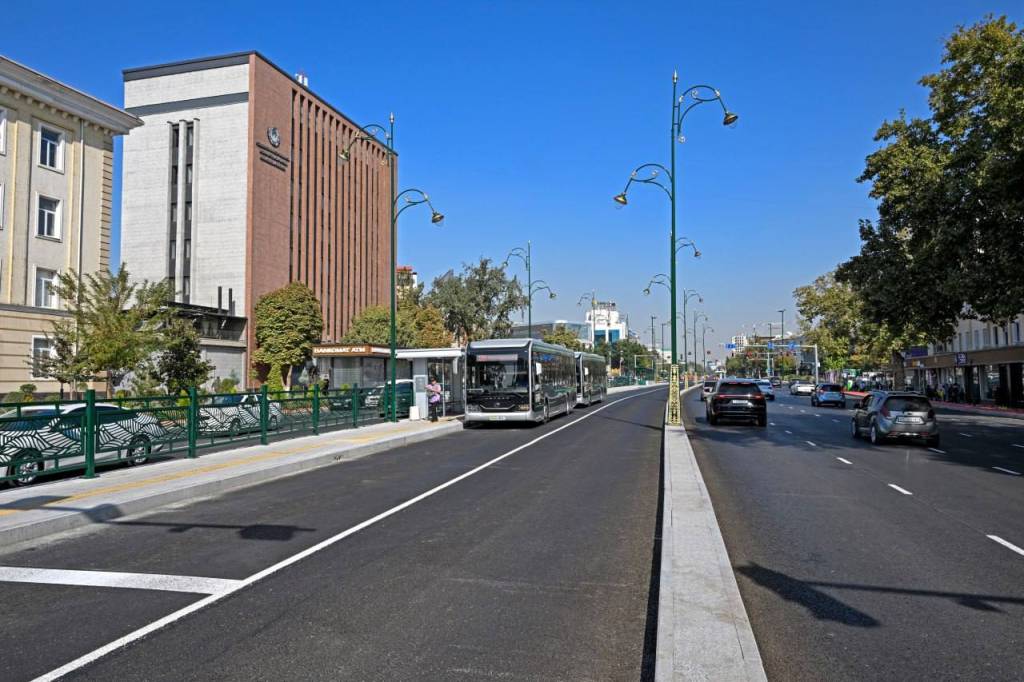
Shota Rustaveli Street, one of the city’s main arteries, connects several districts of Tashkent. To improve traffic flow, the section from Mirabad Street to Choshtepa Street, nearly 7 kilometers long, has been completely reconstructed.
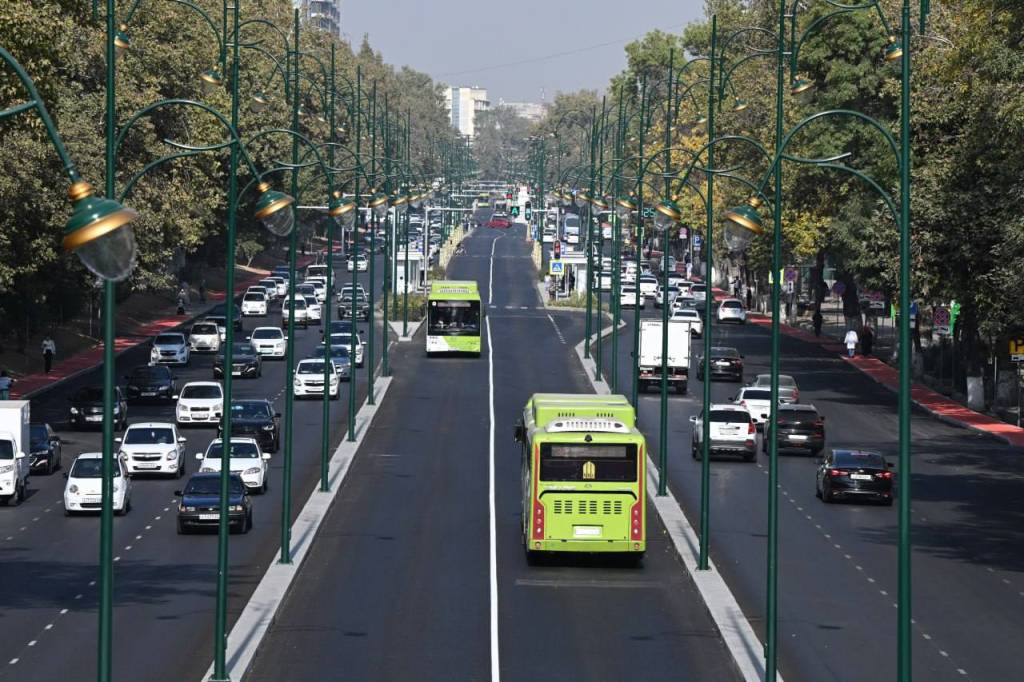
The new layout includes 10 lanes: six for cars, two for public transport, and two designated for parking.

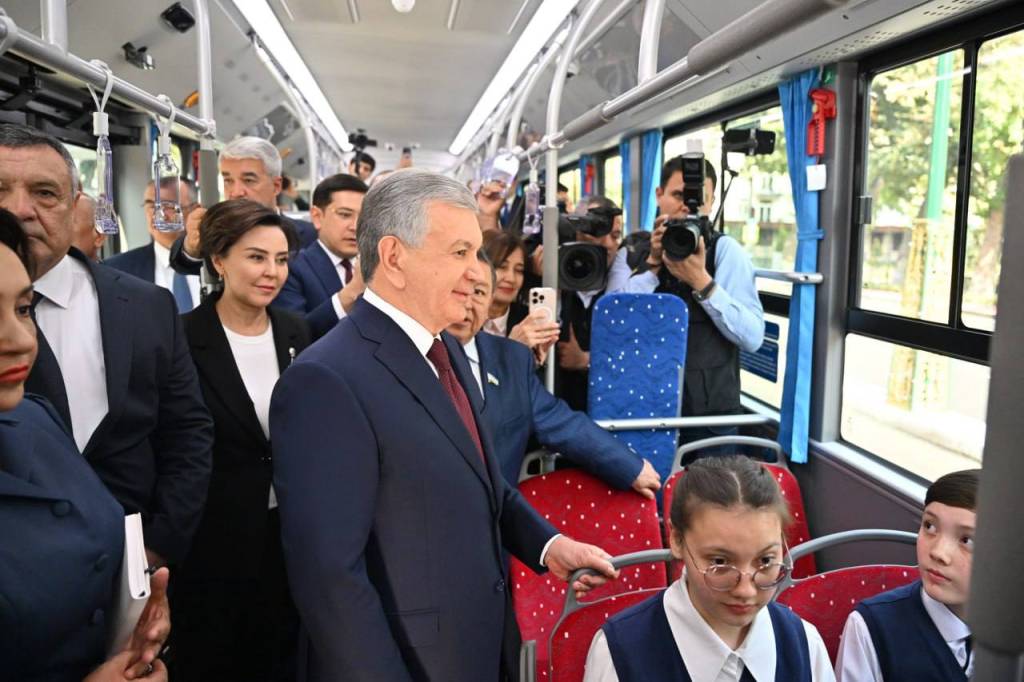
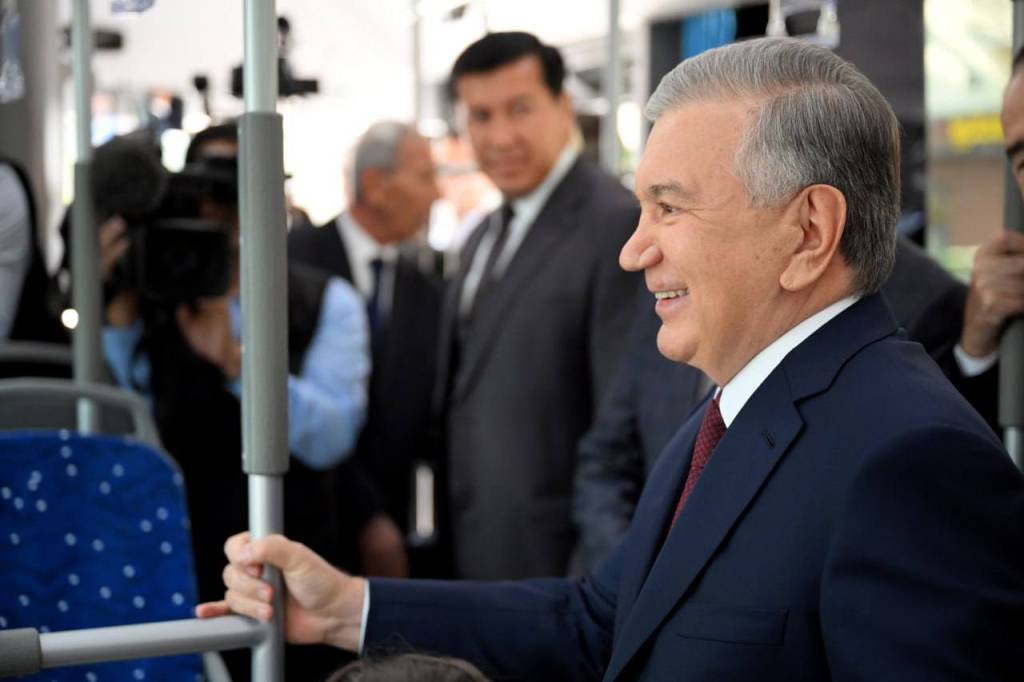
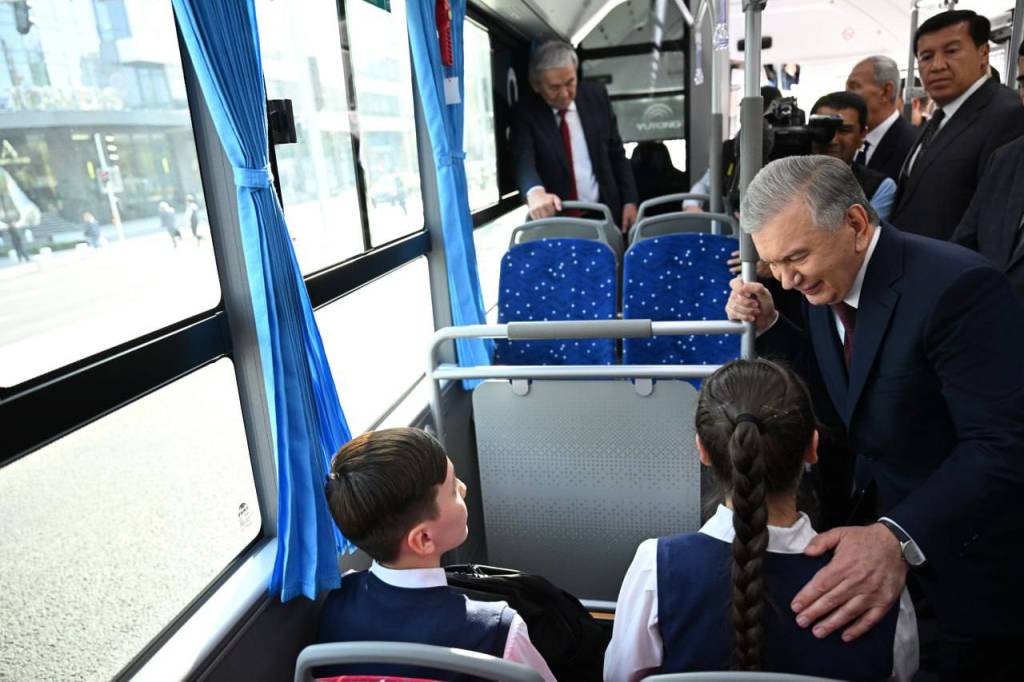
The President, accompanied by representatives of state agencies and public organizations, traveled by bus along the street, inspected the new features, and spoke with passengers about the improvements.
For the first time in Tashkent, a Bus Rapid Transit (BRT) system – dedicated lanes for public transport – has been introduced, drawing on the experience of developed countries. This innovation has significantly increased bus speed and passenger comfort.

As a result of the $19.2 million project, passenger flow rose from 2,500 to 6,000 people per hour. The road’s capacity reached 40,000 vehicles per day, while the average traffic speed increased from 23 to 30 kilometers per hour.
Most importantly, road safety improved markedly, with a significant reduction in traffic accidents.

Under the project, 21 new bus stops and 463 smart traffic lights were installed, and an intelligent transport management system was implemented. In addition, the street now features parking areas, bicycle lanes, green zones, and modern irrigation and drainage systems.
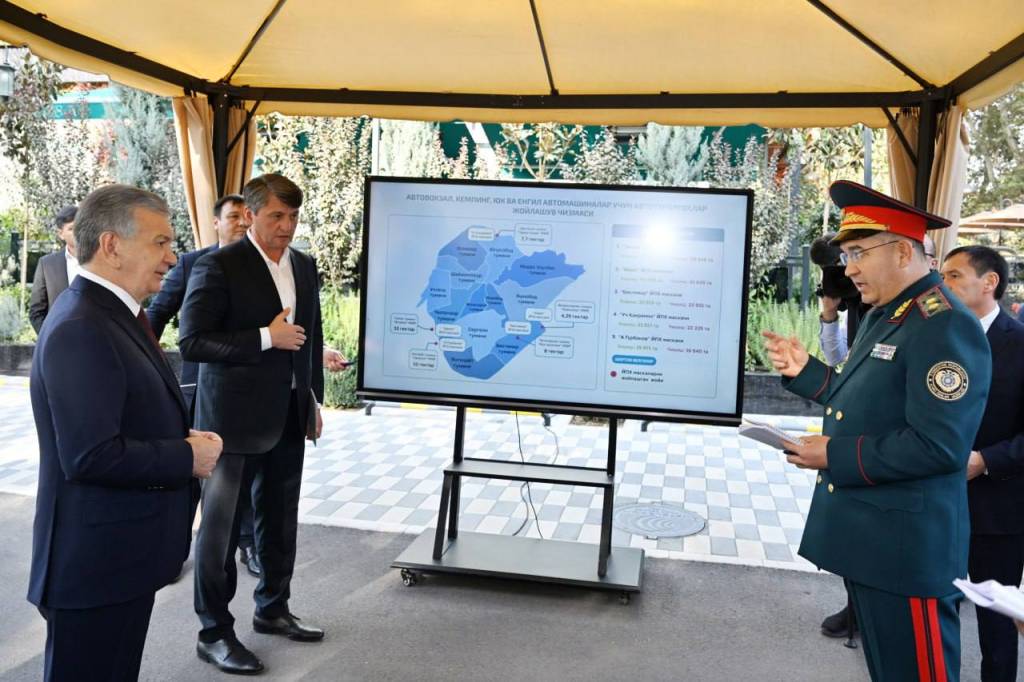
At the site, the President was also presented with projects to expand the network of dedicated bus lanes and to create new transport hubs around the capital.

“If we had not built new metro lines and purchased modern buses, traffic in Tashkent today would have become extremely difficult. That is why we are improving the roads and developing public transport to make life more convenient for people. We will continue this work in all our cities”, President Shavkat Mirziyoyev emphasized.
The President instructed responsible officials to improve public transport convenience, reduce traffic congestion, and ensure effective transport connectivity between Tashkent and New Tashkent.

The renovated Shota Rustaveli Street has not only beautified the capital but has also become a symbol of Tashkent’s transition toward a modern and intelligent transport system.