Events Marking the 690th Anniversary of Amir Temur Held in France
12.10.2026
154554
1 min.
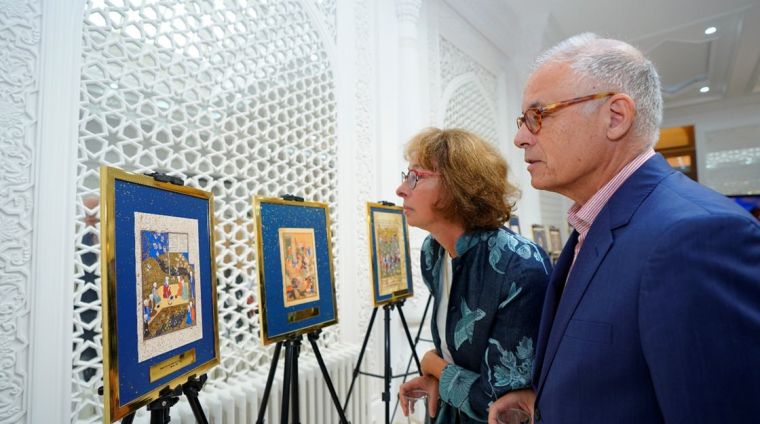
An international roundtable and an exhibition titled “The Legacy of the Great Temurids: Art, Science and Culture of Central Asia” were held at the Embassy of Uzbekistan in France to mark the 690th anniversary of the birth of Amir Temur, reports Dunyo IA.
The event brought together representatives of government bodies and scientific and cultural institutions from Uzbekistan and France, prominent historians, orientalists and art historians, international experts, and members of the Uzbek community residing in France.
The roundtable focused on the rich historical and cultural heritage of Amir Temur and the Temurid era, their contributions to the development of science, education, art and architecture, as well as the importance of scientific and cultural ties between the East and the West.
The programme also featured presentations on the activities of the Islamic Civilization Center in Uzbekistan and an exhibition showcasing the scientific and cultural achievements of the Temurid era.
The event aims to promote Uzbekistan’s rich historical and cultural heritage in France, highlight the place of Amir Temur and the Temurids in world civilization, and further strengthen cultural and humanitarian cooperation between Uzbekistan and France.
SHARE INFORMATION ON SOCIAL NETWORKS



 Iman
 Prayer
 Fasting
 Zakat
 Haj
 Qur`an
 Lessons of Islam
 Contact