A delegation from the British Woolf Institute and the University of Cambridge visited Tashkent, Samarkand and Bukhara, where it familiarized itself with Uzbekistan’s experience in ensuring interreligious harmony and freedom of conscience, reports Dunyo IA.
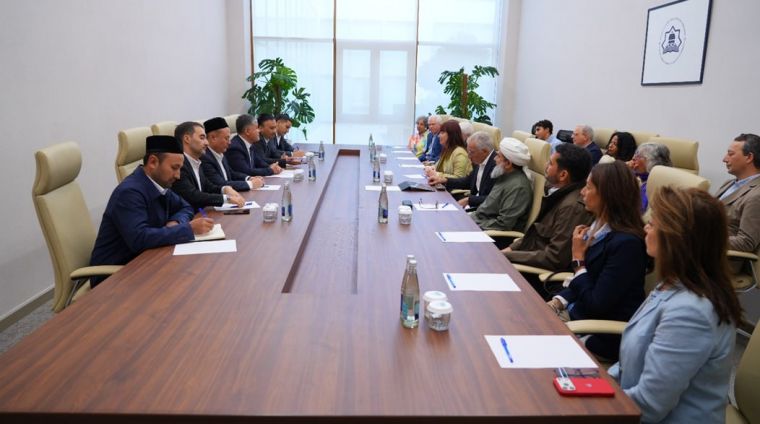
According to the Embassy of Uzbekistan in the United Kingdom, meetings with representatives of the Committee on Religious Affairs and the Muslim Board were held in Tashkent. Guests were briefed on reforms in the religious sphere, measures to strengthen tolerance and interfaith harmony; and the protection of youth from radical ideas.
Delegation also visited the Center of Islamic Civilization in Tashkent, as well as historical monuments and shrines in Samarkand and Bukhara.
Woolf Institute, located in Cambridge, specializes in the study of mutual understanding among Judaism, Christianity and Islam, academic research; and the development of interreligious dialogue.
Institute’s Executive Director, Dr. Esther-Miriam Wagner, noted that Uzbekistan is the heart of Central Asia connecting the region’s Islamic heritage, and that the optimism and ambitious plans of the young country can serve as an example for Western states.
Institute Fellow Rick Sopher, former Chief Executive Officer of “Edmond de Rothschild Capital Holdings”, stated that during the trip, which included conversations with madrasah students and teachers, the delegation found no signs of religious radicalism. According to him, as a Jew, it was personally important that he heard no complaints of oppression in the synagogues of Samarkand. He called upon representatives of the United Kingdom and Europe to study Uzbekistan’s experience in ensuring unity and mutual respect.
University of Cambridge researcher Dr. Aliya Abdukadir Ali stated that she was impressed by the protection of women’s rights in Uzbekistan. She drew attention to the fact that the memory of women has been preserved for centuries at the Zangi-ata pilgrimage site in Tashkent and the Qizbibi site in Bukhara.
Visit became an important opportunity to convey Uzbekistan’s experience in the field of interreligious harmony to the international community and to develop academic, educational, cultural and humanitarian cooperation with the United Kingdom.



 Iman
 Prayer
 Fasting
 Zakat
 Haj
 Qur`an
 Lessons of Islam
 Contact