On October 15, President Shavkat Mirziyoyev visited Yakkasaray district of Tashkent city to inspect the results of the reconstruction of Shota Rustaveli Street.
The development of road infrastructure and the creation of convenient traffic conditions remain among the key priorities for the capital, whose population and urban area continue to grow rapidly. Consequently, modern roads and bridges are being built across Tashkent, while existing ones are being upgraded to meet contemporary standards.
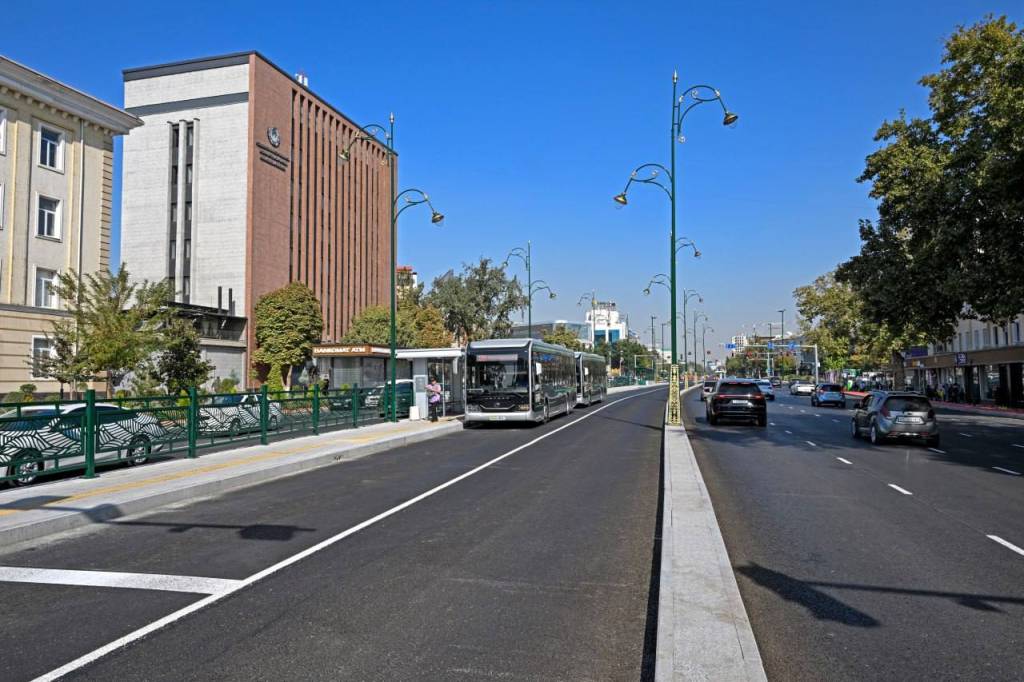
Shota Rustaveli Street, one of the city’s main arteries, connects several districts of Tashkent. To improve traffic flow, the section from Mirabad Street to Choshtepa Street, nearly 7 kilometers long, has been completely reconstructed.
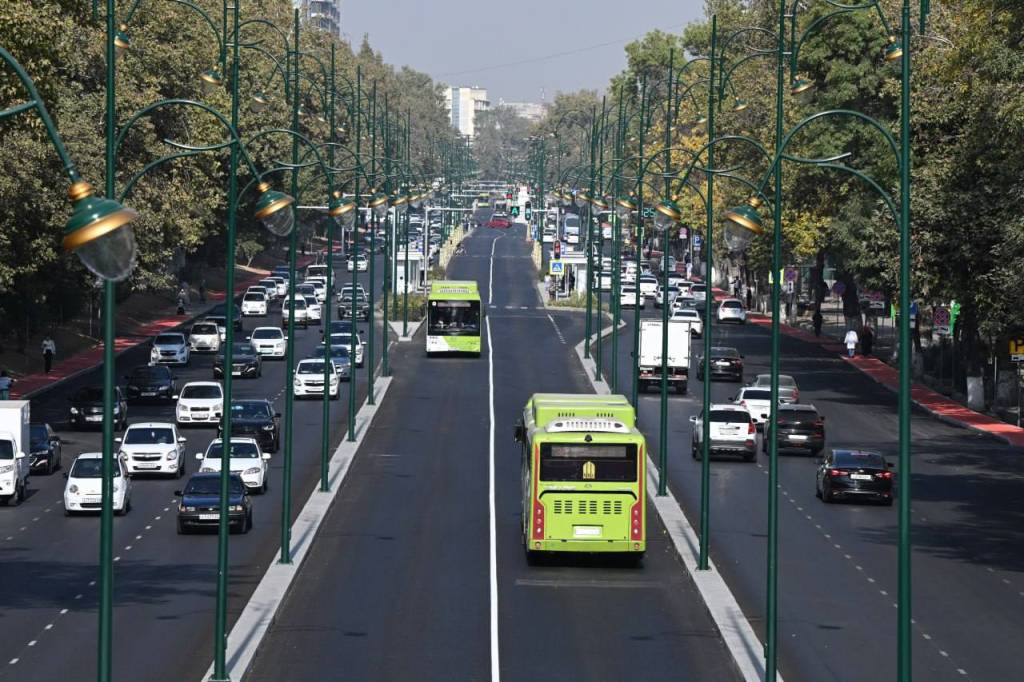
The new layout includes 10 lanes: six for cars, two for public transport, and two designated for parking.
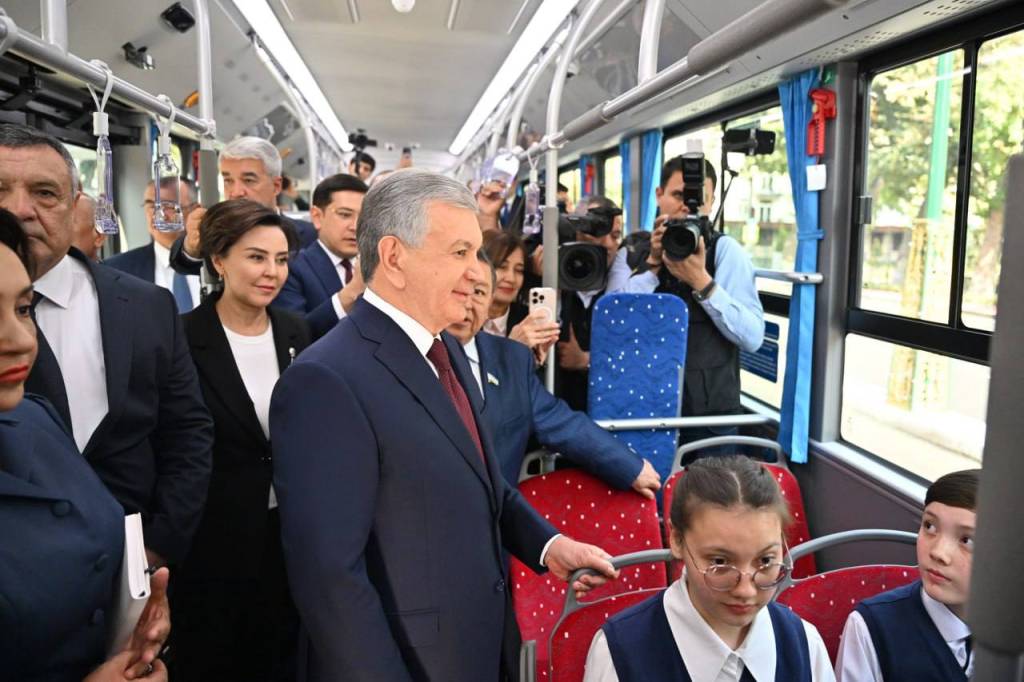
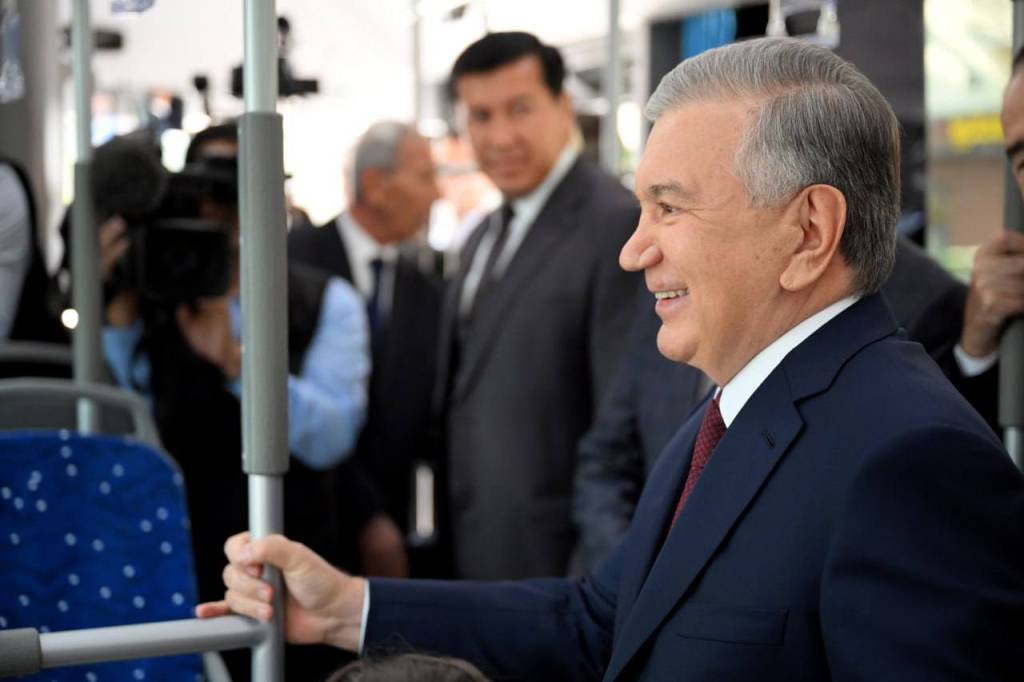
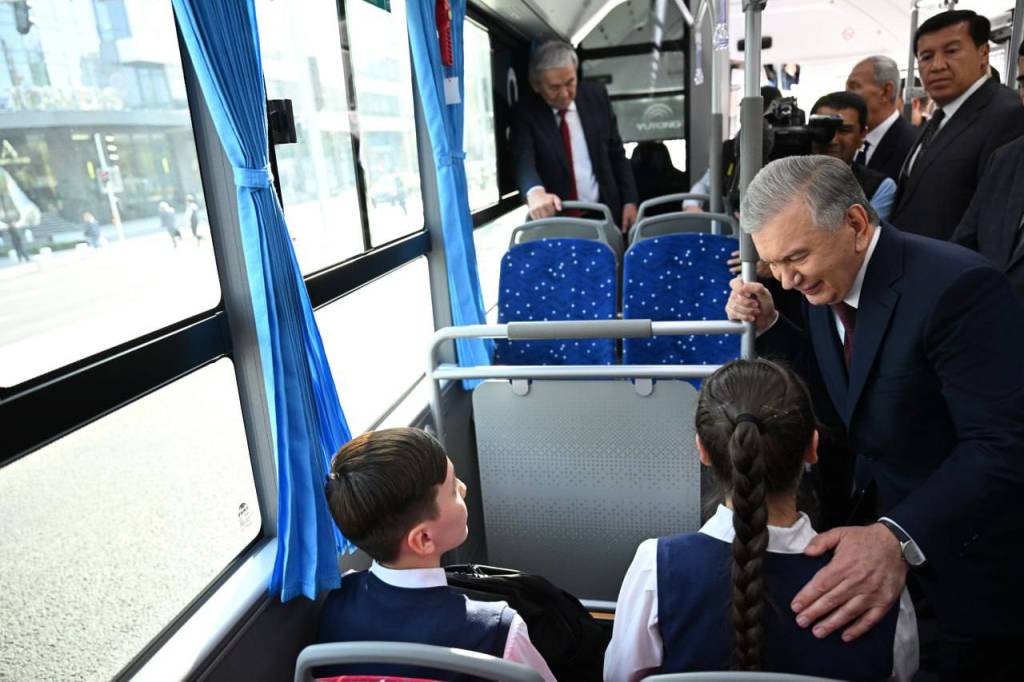
The President, accompanied by representatives of state agencies and public organizations, traveled by bus along the street, inspected the new features, and spoke with passengers about the improvements.
For the first time in Tashkent, a Bus Rapid Transit (BRT) system – dedicated lanes for public transport – has been introduced, drawing on the experience of developed countries. This innovation has significantly increased bus speed and passenger comfort.
As a result of the $19.2 million project, passenger flow rose from 2,500 to 6,000 people per hour. The road’s capacity reached 40,000 vehicles per day, while the average traffic speed increased from 23 to 30 kilometers per hour.
Most importantly, road safety improved markedly, with a significant reduction in traffic accidents.
Under the project, 21 new bus stops and 463 smart traffic lights were installed, and an intelligent transport management system was implemented. In addition, the street now features parking areas, bicycle lanes, green zones, and modern irrigation and drainage systems.
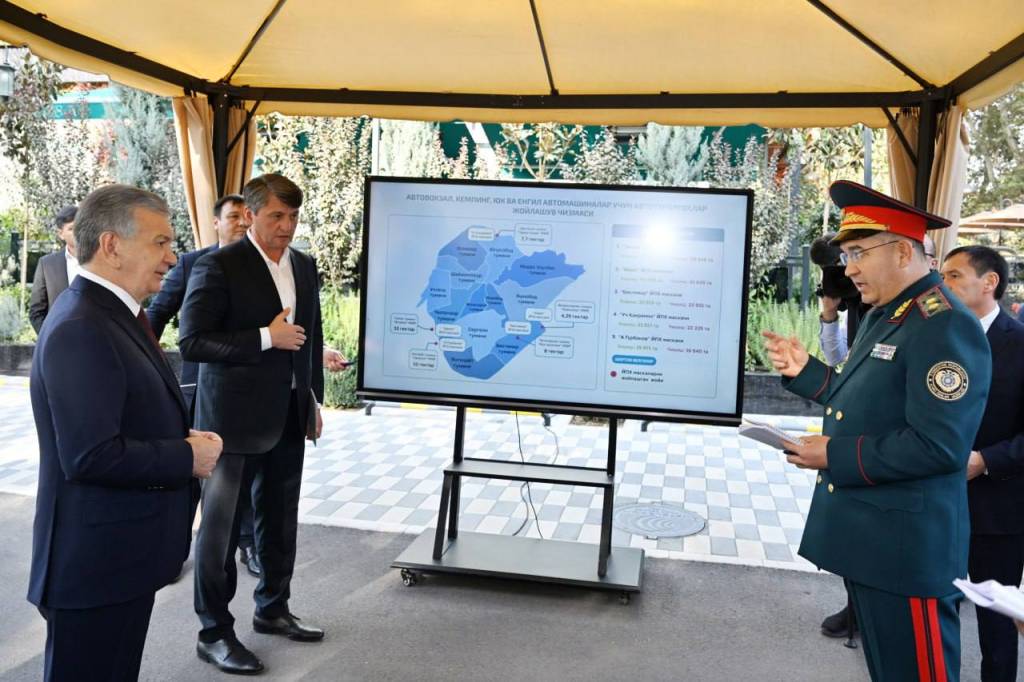
At the site, the President was also presented with projects to expand the network of dedicated bus lanes and to create new transport hubs around the capital.
“If we had not built new metro lines and purchased modern buses, traffic in Tashkent today would have become extremely difficult. That is why we are improving the roads and developing public transport to make life more convenient for people. We will continue this work in all our cities”, President Shavkat Mirziyoyev emphasized.
The President instructed responsible officials to improve public transport convenience, reduce traffic congestion, and ensure effective transport connectivity between Tashkent and New Tashkent.
The renovated Shota Rustaveli Street has not only beautified the capital but has also become a symbol of Tashkent’s transition toward a modern and intelligent transport system.



 Iman
Iman  Prayer
  Fasting
  Zakat
Zakat  Haj
Haj  Qur`an
  Lessons of Islam
  Contact