News
“National Geographic”: Uzbekistan Combines Silk Road Heritage with Modern Tourism Infrastructure
17.09.2026
97782
1 min.

The renowned American magazine “National Geographic” has published an article on Uzbekistan in both its print and digital editions, titled “The Amazing Turn of the Silk Road – The World’s First Great Trade Route,” reports a Dunyo IA.
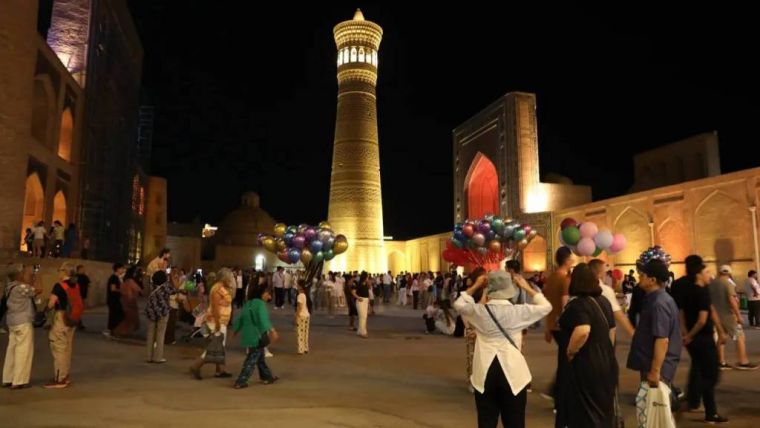
The author highlights Tashkent, Samarkand, Bukhara and Khiva, presenting them as key cities along the historic Silk Road and as modern tourist destinations.
Particular attention is given to the country’s tourism development, the growing number of international visitors, the construction of new facilities, and the expansion of high-speed rail connections between cities.
Tashkent’s Chorsu Bazaar is presented as a place where the trading traditions of the Silk Road continue to thrive, while Samarkand is described as a historic center of scholarship and Islamic culture, featuring Registan Square and Mirzo Ulughbek ancient observatory.
Bukhara is portrayed as a city undergoing an active tourism transformation, while Khiva is described as a destination where the atmosphere of the past is particularly palpable. The article also highlights new tourism projects inspired by Silk Road architecture, while noting discussions surrounding the preservation of the historic urban environment.
Overall, the article presents Uzbekistan as a country once again opening itself to the world while preserving its historical heritage and simultaneously developing modern tourism infrastructure.
SHARE INFORMATION ON SOCIAL NETWORKS



 Iman
Iman  Prayer
  Fasting
  Zakat
Zakat  Haj
Haj  Qur`an
  Lessons of Islam
  Contact