First Place In Antarctica Where Salah Was Performed: Jinnah Antarctic Station
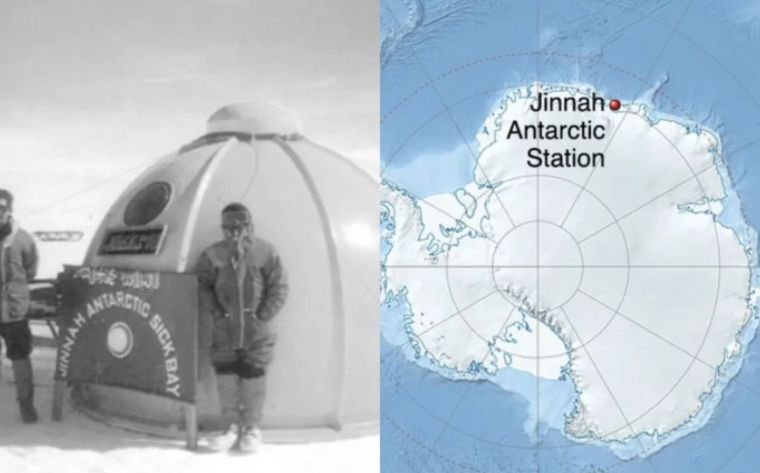
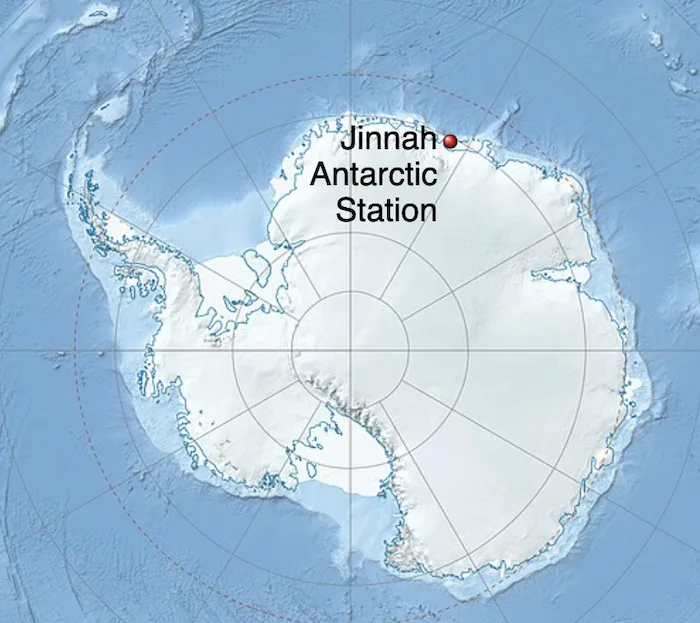
Jinnah Antarctic Research Station, operational since 1991, emerges as likely site of inaugural salah in Antarctica amid Pakistan’s polar scientific missions.
The Jinnah Antarctic Station, Pakistan’s permanent research facility established in 1991, is recognized as the first confirmed location where Islamic prayers (salah) were performed on the Antarctic continent.
Situated in the East Antarctic region, the station has served as a scientific and logistical base for decades.
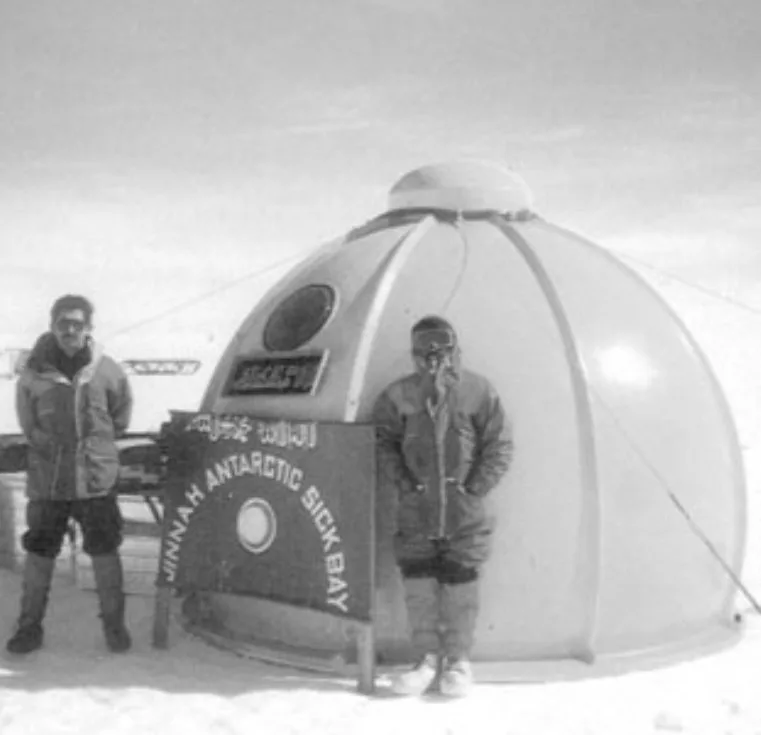
Operated by Pakistan’s National Institute of Oceanography, the station conducts year-round studies in glaciology, marine biology, and climate science.
Since its inauguration, Muslim members of winter-over teams have maintained prayer routines within designated spaces at the base, despite extreme cold, months-long darkness, and isolation.
While informal worship likely occurred earlier during transient expeditions, documented communal prayers began with the station’s continuous operation.
A small musallah (prayer area) was established inside the main living module, oriented toward Mecca using calculated qibla directions specific to the Antarctic region.
Antarctic Treaty protocols respect all forms of religious observance across research stations. The Government of Pakistan confirmed the station remains active today, with ongoing research and religious accommodation for personnel.
The station is named for Muhammad Ali Jinnah, founder of Pakistan.
Gandhi Praised Caliphs Abu Bakar and Umar as Role Models in His 1937 Newspaper

In the July 27, 1937 issue of his weekly journal Harijan, Mahatma Gandhi praised Islamic Caliphs Abu Bakar (RA) and Umar Farooq (RA) as examples of humble and responsible leadership.
In a rare reference to Islamic history, Mahatma Gandhi praised Caliphs Abu Bakar and Umar Farooq as examples of simple and honest leadership.
He made this statement in the July 27, 1937 issue of his weekly journal, Harijan, offering advice to Indian National Congress leaders as they began to hold public office.
In that issue of Harijan, Gandhi wrote:
“I cannot give you the reference of Ram Chandar or Krishna, because they were not considered as historical figures. I cannot help it but to present to you the names of (Hazrat) Abu Bakar (RA) and (Hazrat) Umar Farooq (RA). They were leaders of a vast Empire, yet they lived a life of austerity.” Harijan – Dated: 27.07.1937
This statement came during an important moment in India’s history. In 1937, the Indian National Congress formed governments in several provinces for the first time under British rule, following elections held under the Government of India Act, 1935.
Gandhi, always cautious about the moral health of leaders, urged Congress members not to be consumed by power or luxury. He used the examples of Caliphs Abu Bakar and Umar Farooq to remind them that true leaders live simply and serve the people.
Harijan was Gandhi’s weekly newspaper, launched in 1933 to support his social reform campaigns — especially against untouchability. The journal regularly featured Gandhi’s views on religion, politics, and ethics.
The journal was published in English, along with versions in Hindi (Harijan Sewak) and Gujarati (Harijanbandhu), and ran until 1955.
This was not the only time Gandhi showed appreciation for Islamic values. He often quoted the Quran, Prophet Muhammad (PBUH), and his companions in speeches and writings.
