The site is working in test mode!
01 September, 2026   |   19 Rabī‘ al-awwal, 1448

Tashkent city
Fajr
04:26
Sunrise
05:49
Dhuhr
12:23
Asr
17:01
Maghrib
19:00
Isha
20:19
Bismillah
01 September, 2026, 19 Rabī‘ al-awwal, 1448

The Central Bank forecasts the emergence of at least 10 Islamic banks by 2030

28.10.2025   115610   4 min.
The Central Bank forecasts the emergence of at least 10 Islamic banks by 2030

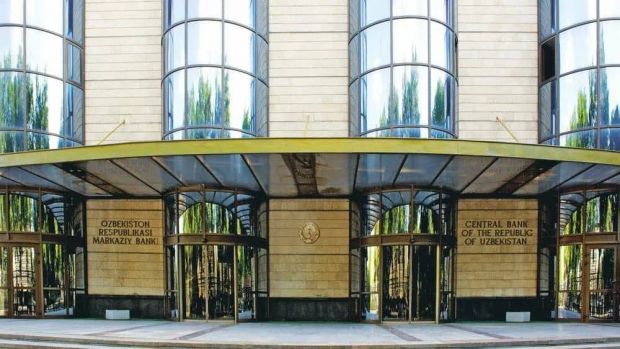
The Central Bank expects to establish at least 10 full-fledged Islamic banks by 2030. Also, “Islamic windows” — branches providing Sharia financial services — will appear in three state banks. The Central Bank considers Islamic finance as a tool for withdrawing funds from the shadow economy.

Why is this important

According to a UNDP survey, 68% of Uzbekistan’s population does not want to use traditional banking services due to religious beliefs. Launching Islamic banks will expand financial inclusion, increase bank assets, and reduce the share of the shadow economy. This is the largest transformation of the financial system since independence.

What happened

  • The Central Bank forecasts the emergence of at least 10 Islamic banks by 2030;
  • Three state banks (not yet defined) will create “Islamic windows”;
  • CB Deputy Chairman Abrorhuja Turdaliyev called Islamic finance a tool for bringing funds out of the shadows;
  • In September, the Legislative Chamber approved the law on Islamic banking activities in the first reading;
  • UNDP Survey: 68% of the population and 60% of businesses do not use traditional banks due to their religious beliefs.

Draft law

The document introduces the concepts of “Islamic banking activity”, “Islamic financial operations”, “investment deposit”, and others. A separate license is provided for Islamic banks. Classical banks will be able to organize “Islamic windows” if they have a license.

Islamic products: Murabaha (deferred trade financing), Mudaraba (investment partnership), Mushoraka (joint venture), Wakala (agency financing), Salam (prepayment of goods).

Features of regulation

  • Islamic banks will be able to conduct direct trade activities, establish legal entities, and acquire shares in the authorized capital without restrictions;
  • Islamic Finance Councils (Sharia Councils) will be established under the Central Bank and banks;
  • Notarial acts of Islamic banks are exempt from state duty;
  • A separate tax regime may be introduced, taking into account the specifics of Islamic finance.

Assessment of demand

The Deputy Chairman of the Central Bank clarified: when we talk about 50-60% of the population preferring Islamic finance, we are talking about those who prefer it. Those who categorically refuse traditional services are significantly fewer.

Context

Islamic finance prohibits the collection of interest (riba) and speculative operations. Instead, partnership models are used, where the bank and the client share profits and risks. Uzbekistan is a predominantly Muslim country (90%+ of the population), where a significant portion of citizens avoid traditional banks for religious reasons.

Creating 10 Islamic banks by 2030 is an ambitious task, given that there are currently around 35 commercial banks operating in the country. “Islamic windows” in state banks will allow large players (Uzpromstroybank, Halyk Bank, Asaka Bank) to enter a new segment of clients without creating separate structures.

The Central Bank sees Islamic finance as a tool for combating the shadow economy: religiously motivated citizens who do not trust traditional banks will be able to legalize funds through Sharia products.

A separate tax regime may include benefits for Murabaha-type operations, where the bank formally purchases goods and resells them to the client with a markup — to avoid double taxation.


Other posts

The Muslim World League

15.10.2025   116048   5 min.
The Muslim World League

The Muslim World League (MWL) is an independent international organization comprising members from various Islamic countries and sects. Headquartered in Makkah, its mission is to clarify the true image of Islam and foster friendship among peoples.

Establishment:
The MWL was established by a resolution issued by the General Islamic Conference held in Makkah on May 18, 1962 (corresponding to 14 Dhu al-Hijjah 1381 AH).

The MWL Serves as a Member in:

  • United Nations (UN): The MWL serves as an observer member in the Economic and Social Council, among international non-governmental organizations holding consultative status.
  • Organization of Islamic Cooperation (OIC): The MWL serves as an observer, participating in summit conferences, meetings of foreign ministers, and all other conferences convened by the organization.
  • United Nations Educational, Scientific and Cultural Organization (UNESCO): The MWL serves as a member.
  • United Nations Children’s Fund (UNICEF): The MWL serves as a member.

Its Charter:
We, the members of the Muslim World League, representing the MWL with faith and conviction, pledge to Almighty Allah to:

  • Call upon all nations to work toward achieving the happiness and welfare of humanity, ensuring social justice for all, and fostering the best possible human society.
  • Bear witness before Allah that we do not seek to harm or interfere in the affairs of others, nor do we desire to dominate or exert control over anyone.
  • Strive to unify Muslims and eliminate the causes of division within Islamic societies across the world.
  • Promote and encourage all forms of benevolence.
  • Declare that Islam does not endorse populism or racism.
  • Unite our efforts to achieve these goals in a constructive and principled manner.
  • Utilize all available spiritual, material, and moral means to fulfill the aspirations outlined in this charter.

The MWL’s Objectives and Methods of Implementation:
The MWL pursues its goals through means that fully comply with Islamic law, including the following:

  • Introduce Islam and its tolerant values as presented in the Holy Qur’an and the Sunnah.
  • Consolidate the principles of centrism and moderation within the consciousness of the Muslim Ummah.
  • Address and resolve issues facing the Muslim Ummah and prevent factors that cause conflict and discord.
  • Emphasize civilizational rapprochement and promote a culture of dialogue.
  • Address the concerns of Muslim minorities and resolve their issues in accordance with the constitutions and legal frameworks of the countries in which they reside.
  • Utilize the Hajj season as an opportunity to facilitate meetings among scholars, intellectuals, and organizational leaders to provide scientific and practical solutions for raising the standards of Muslims worldwide.
  • Preserve the Islamic identity of the Ummah, strengthen its global standing, and enhance its unity.

Financial Management:
The Muslim World League relies on its endowments for financial management.
Investments derived from these endowments constitute a major source of funding for the organization.

The General Secretariat:
The General Secretariat of the Muslim World League serves as the executive arm of the organization. It oversees the day-to-day operations of the League and implements the policies and resolutions adopted by the Supreme Council. This is carried out under the leadership of the Secretary-General, with the support of assistant secretaries and the general administrative staff.

Headquarters:
Kingdom of Saudi Arabia
Makkah, Al-Aqaba District
P.O. Box 537
Tel: +966-12-5309444
Fax: +966-12-5601319 / +966-12-5601267