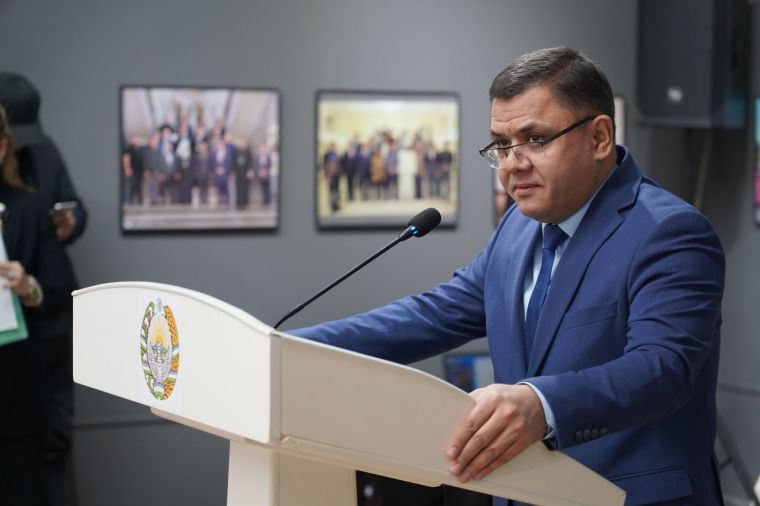
A delegation of the Muslim Board of Uzbekistan, headed by its Chairman, Mufti Sheikh Nuriddin Kholiknazar, participated in the International Consultation Meeting of the Fatwa Councils held in Istanbul, reports Dunyo IA correspondent.
Event was organized at the initiative of the Presidency of Religious Affairs of Türkiye. It was attended by representatives of fatwa centers from Qatar, Afghanistan, Bulgaria, Somalia, Mauritania, Yemen, Palestine, Syria, Iraq, the UAE, Kazakhstan, Russia, Indonesia, the USA, Uzbekistan and many other countries.
The meeting featured speeches by the President of the Presidency of Religious Affairs of Türkiye, Safi Arpaguş, the Minister of Endowments of Somalia, the Minister of Education and Islamic Affairs of Mauritania, the Minister of Endowments and Religious Guidance of Yemen, the Supreme Sharia Judge of Palestine, the Grand Mufti of Syria, as well as other religious figures and scholars.
Event was dedicated to the role of Fatwa Boards in strengthening the unity of the Muslim Ummah. Particular attention was paid to issues of the collective issuance of fatwas, preventing the spread of contradictory interpretations on the same religious matters and addressing topical questions of creed that concern the youth. Furthermore, participants exchanged views on challenges facing the institution of the family, the stance of fatwa boards toward violence and terrorism, as well as issues related to migration.
Sheikh Nuriddin Kholiknazar delivered a report on the state policy and reforms implemented in the religious sphere of Uzbekistan, highlighting the main directions and plans for further work in this area.
According to the Mufti, amid modern challenges and growing threats, the unity and solidarity of the Muslim Ummah are the most important factors in ensuring peace and development. Fatwa Councils must find solutions to contemporary issues, guided by the norms of Sharia and the principles of moderation. It is also necessary to prevent the spread of unsubstantiated fatwas on the internet.
At the same time, detailed information was presented on the activities and experience of the Fatwa Center of Uzbekistan, which was awarded the “Imam al-Qarafi” Prize by Egypt’s Dar al-Ifta.
Proposals of the head of the Uzbek delegation were highly commended by the participants. In particular, these included creating a unified digital platform for publishing fatwas approved by fatwa boards, developing criteria for publishing fatwas on the internet and utilizing artificial intelligence in this sphere, as well as implementing joint programs to train qualified specialists in Islamic jurisprudence – faqihs.
During the meeting between representatives of the religious authorities of Uzbekistan and Türkiye, issues of bilateral cooperation were discussed. The parties reached agreements in areas such as pilgrimage tourism, multilateral interaction within the framework of the Organization of Turkic States, as well as other promising areas of partnership.



 Iman
 Prayer
 Fasting
 Zakat
 Haj
 Qur`an
 Lessons of Islam
 Contact