News
Experience of Uzbekistan in Tourism Development is also Valuable for Pakistan
10.11.2026
73792
2 min.
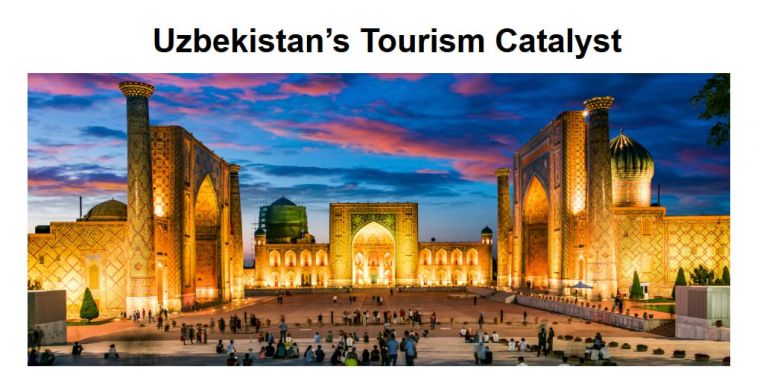
Pakistani magazine “Diplomatic Insight”, specializing in international relations and diplomacy, has published an analytical article by its Editor-in-Chief, Asif Noor, titled “Uzbekistan's Tourism Engine”, reports Dunyo IA.
Publication examines the sector's reforms, the country's rich historical and cultural heritage, and its rising prominence in the global tourism market. According to the author, Samarkand, Bukhara and Khiva not only preserve the legacy of world civilization but have also become examples of modern development and openness. He also noted that the spiritual heritage of Imam al-Bukhari and Imam at-Tirmidhi enhances Uzbekistan's tourism and educational significance within the Muslim world.
Article cites statistics showing that 11.7 million foreign visitors travelled to the country in 2025 - a more than sixfold increase compared to 2021 - while 10.3 million arrivals were recorded during the first nine months of 2026. Travel from China, Malaysia and Indonesia continues to grow.
“Tourism in Uzbekistan is not limited to sightseeing at historical monuments, Asif Noor noted. - In 2025, 67.3 percent of visits were related to visiting relatives, 16.5 percent to leisure, and 11.3 percent to business purposes. Thus, tourism is becoming a vital economic mechanism that stimulates trade, investment, hospitality, transport, construction and craftsmanship”.
Author separately examines Uzbekistan's experience from the perspective of cooperation with Pakistan. In his view, there are significant opportunities for developing pilgrimage, cultural and historical tourism between Samarkand and Bukhara on one side and Lahore and Multan on the other. Direct flights, tourism packages, joint events and business forums, he writes, could provide a new impetus to the ties between the two nations.
Article concludes by emphasizing: “Uzbekistan's experience in blending the heritage of the Great Silk Road with modern development unlocks new opportunities for cooperation between Central and South Asia”.
SHARE INFORMATION ON SOCIAL NETWORKS



 Iman
 Prayer
 Fasting
 Zakat
 Haj
 Qur`an
 Lessons of Islam
 Contact