The world is currently witnessing rapid advancements in artificial intelligence (AI) and digital technologies, to the extent that these tools have become integral to various aspects of life—particularly in economics, education, culture, media, and public services.
In the face of this profound transformation, there is an urgent need to examine the dimensions of AI from an ethical and religious perspective that balances leveraging modern achievements with preserving human values and Shari’a (Islamic law) regulations.
In this context, scholars and specialists affirm that AI is a product of human intellect and creativity, falling under the divine indication: "And He creates that which you do not know" (Surah An-Nahl: 8). This verse alludes to emerging scientific and technical innovations that were previously unknown.
Today, AI has become the foundation for many modern applications, such as e-government, smart cities, autonomous vehicles, drones, and other technologies that contribute to facilitating human life.
However, regardless of its significant benefits, this evolution is not without difficulties and potential risks. Therefore, there is a necessity to regulate, control, and monitor the use of AI, taking the required measures to mitigate its negative impacts—especially in sensitive fields related to religion and Fatwa (legal rulings), where this issue must be given special attention.
Artificial Intelligence and Shari’a Fatwa
Scholars and researchers in jurisprudence academies and scientific conferences have reached a consensus that AI can serve as a supportive tool for gathering, analyzing, and classifying Shari’a information, as well as facilitating access to it. However, it is impermissible to rely on it independently to derive Shari’a rulings or issue Fatwas.
Fatwa issuance requires the direct presence of a qualified jurist (faqih), as rulings vary based on the seeker’s circumstances, time, place, customs, and socio-economic conditions. These nuanced human considerations cannot be independently comprehended by AI. Furthermore, a prerequisite for a Mufti in Islamic Shari’a is to be a legally accountable person (mukallaf), a condition that cannot be fulfilled by technical systems.
Consequently, the role of AI in the field of Ifta (issuing rulings) remains supportive rather than substitutive, in application of the verse: "So ask the people of the message if you do not know" (Surah An-Nahl: 43). Trustworthy scholars remain the ultimate reference in issuing rulings and bearing Shari’a responsibility.
Areas of Practical Application for AI
Practical experience, including that of the Fatwa Center under the Muslim Board of Uzbekistan, has proven that AI can be employed in several fields, most notably:
• Analyzing and Classifying Inquiries: Categorizing incoming Shari’a questions by topic and region and identifying the most frequent ones.
• Speech-to-Text Conversion: Transforming audio questions and answers into written text and storing them in organized databases.
• Supporting Fatwa Experts: Suggesting previously archived answers to experts, which are only sent to the inquirer after review and approval by specialists.
• Enhancing Community Security: Through smart, digital, and safe city projects.
• Combating Corruption: By reducing human intervention in administrative procedures.
• Operating in Hazardous Environments: Utilizing smart technologies in environments that are dangerous or harmful to human health.
• Dawah and Education: Facilitating access to Islamic knowledge, lessons, and sermons, and developing educational content that serves the Muslim Ummah.
• Humanity at the Center of Technical Evolution
Specialists emphasize that humans must remain at the heart of the AI development process, and that these technologies must be managed based on a solid ethical and value-based foundation. Technology is not an end in itself, but a means to serve humanity and facilitate its affairs; it should not become a substitute for man or a tool that controls his destiny.
In this framework, the real challenge lies in reconciling AI with religious requirements, legal standards, and national values, ensuring the achievement of cognitive and technical development without compromising Shari’a and human responsibility.
In conclusion, AI, if used with wisdom and clear regulations, can be a great aid to humanity across various fields. Religious and scientific institutions in the Islamic world—including the Muslim Board of Uzbekistan—affirm their permanent readiness to actively participate in employing these modern technologies to spread Islamic knowledge, foster dialogue between religion and science, and contribute to finding solutions for contemporary global challenges.
The ultimate goal remains to harness the blessings of science and technology for the betterment of humanity, in a manner that pleases Allah the Almighty and reinforces the moral values that are the foundation of stability and progress.
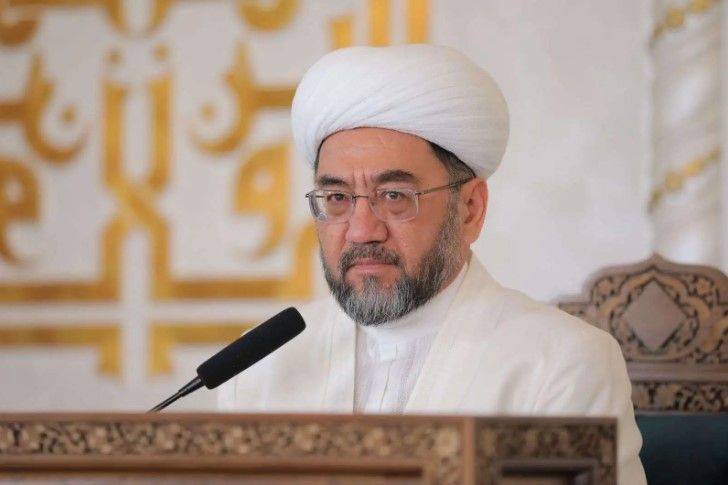
Sheikh Nuriddin Khaliqnazar

The new partnerships and scientific and cultural projects being established in the international media sphere are taking the international activities of the Islamic Civilization Center in Uzbekistan to a new stage. As the next phase of the cooperation initiated during the recently held international media forum “Islamic Civilization: A New Perspective — New Discoveries,” a special presentation, an international scientific and practical conference, and an exhibition are planned to be held at UNESCO Headquarters in Paris. The outcomes of these projects and the preparations for them were discussed at the latest meeting of the academic council of the Islamic Civilization Center in Uzbekistan.
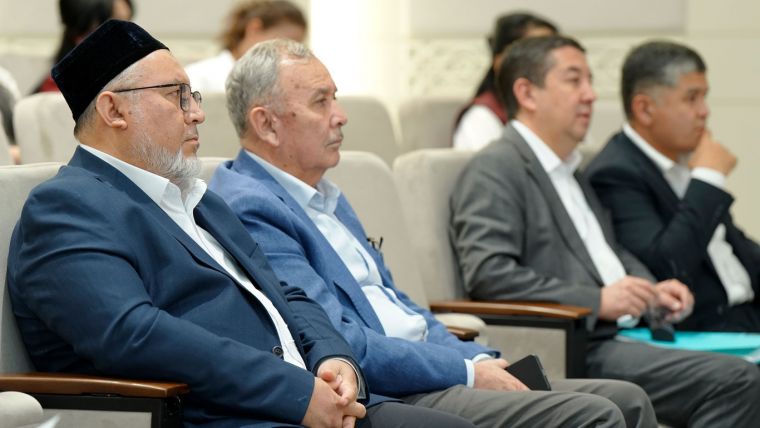
The meeting was attended by members of the academic council, scholars and researchers, as well as staff responsible for the relevant areas.
The meeting began with an analysis of the results of the international media forum. As noted, the forum served as an important platform for dialogue, enabling the Center to present its activities more broadly in the international information and academic spheres and to establish new professional contacts with foreign journalists, media experts, scholars, and researchers.
During the forum, participants exchanged views on the Center’s scientific and research potential, the heritage of Islamic scholarship and culture that developed in the territory of Uzbekistan, as well as opportunities to present this heritage to international audiences through modern media platforms. It was emphasized that the interest shown by representatives of foreign media in the Center’s activities, along with the discussions held with them, had created new opportunities for future cooperation.
In this regard, future tasks were outlined to consistently develop the contacts established during the forum, build systematic cooperation with international and local media outlets, and promote the Center’s scientific projects and research more widely among international audiences.
At the academic council meeting, particular attention was paid to preparations for one of the promising projects aimed at taking the Center’s international scientific and cultural cooperation to a new level — a special presentation, an international scientific and practical conference, and an exhibition planned to be held at UNESCO Headquarters in Paris.
Through these events, the aim is to more broadly introduce to the international academic community the scientific and research activities of the Islamic Civilization Center in Uzbekistan, established on the initiative of President Shavkat Mirziyoyev, as well as the role of the scientific, educational, cultural, and historical heritage that developed in the territory of Uzbekistan in the advancement of world civilization.
Work is currently underway within the framework of the project to involve international scholars and researchers in the events, establish cooperation with scientific institutions and international organizations, develop the presentation and conference program, and prepare the exhibition displays in terms of both academic content and overall substance.
Komiljon Shermuhammedov, Director of the Imam Maturidi International Scientific Research Center, provided information on preparations for the events in Paris:
“Invitations have been sent to around 50 scholars and researchers from France. Relevant work is also being carried out to involve representatives of other international organizations and scientific institutions.
Another important part of the event is the exhibition project to be organized at UNESCO Headquarters. Through five exhibition sections, it is planned to present to the international community key aspects of the scientific, cultural, and historical heritage that developed in the territory of Uzbekistan. Work is underway to display 35 significant artifacts, around 200 ancient books, as well as models of historical monuments.”
Members of the academic council also exchanged views on the substance of these projects, their academic grounding, and the methods of presenting them to an international audience.
In particular, it was noted that, in developing the exhibition displays, it is important to present the scholarly value of historical sources, the historical significance of the artifacts, and their connection to the development of Islamic civilization in the territory of Uzbekistan on the basis of accurate and reliable information.
It was also emphasized that the materials to be presented to international audiences should extensively cover the scholarly schools that emerged in the territory of Uzbekistan, the contributions of great scholars to the development of world science and culture, and the work currently being carried out to study and promote this scientific and educational heritage.
At the conclusion of the meeting, relevant tasks were identified to build on the outcomes of the international media forum through practical projects, further expand cooperation with foreign media outlets and scientific institutions, organize preparations for the events planned at UNESCO Headquarters in Paris at a high level, and widely promote the Center’s scientific and research activities, as well as Uzbekistan’s rich Islamic scientific and cultural heritage, on the international stage.
iccu.uz