The site is working in test mode!
01 November, 2026   |   21 Jumādá al-ūlá, 1448

Tashkent city
Fajr
05:34
Sunrise
06:54
Dhuhr
12:12
Asr
15:37
Maghrib
17:22
Isha
18:36
Bismillah
01 November, 2026, 21 Jumādá al-ūlá, 1448

Artificial Intelligence: Between Technical Evolution and Shari’a Responsibility ​A Contemporary Islamic Vision

29.01.2026   714782   6 min.
Artificial Intelligence: Between Technical Evolution and Shari’a Responsibility ​A Contemporary Islamic Vision

The world is currently witnessing rapid advancements in artificial intelligence (AI) and digital technologies, to the extent that these tools have become integral to various aspects of life—particularly in economics, education, culture, media, and public services. 

In the face of this profound transformation, there is an urgent need to examine the dimensions of AI from an ethical and religious perspective that balances leveraging modern achievements with preserving human values and Shari’a (Islamic law) regulations.

​In this context, scholars and specialists affirm that AI is a product of human intellect and creativity, falling under the divine indication: "And He creates that which you do not know" (Surah An-Nahl: 8). This verse alludes to emerging scientific and technical innovations that were previously unknown. 

Today, AI has become the foundation for many modern applications, such as e-government, smart cities, autonomous vehicles, drones, and other technologies that contribute to facilitating human life.

​However, regardless of its significant benefits, this evolution is not without difficulties and potential risks. Therefore, there is a necessity to regulate, control, and monitor the use of AI, taking the required measures to mitigate its negative impacts—especially in sensitive fields related to religion and Fatwa (legal rulings), where this issue must be given special attention.


​Artificial Intelligence and Shari’a Fatwa


​Scholars and researchers in jurisprudence academies and scientific conferences have reached a consensus that AI can serve as a supportive tool for gathering, analyzing, and classifying Shari’a information, as well as facilitating access to it. However, it is impermissible to rely on it independently to derive Shari’a rulings or issue Fatwas.

​Fatwa issuance requires the direct presence of a qualified jurist (faqih), as rulings vary based on the seeker’s circumstances, time, place, customs, and socio-economic conditions. These nuanced human considerations cannot be independently comprehended by AI. Furthermore, a prerequisite for a Mufti in Islamic Shari’a is to be a legally accountable person (mukallaf), a condition that cannot be fulfilled by technical systems.

​Consequently, the role of AI in the field of Ifta (issuing rulings) remains supportive rather than substitutive, in application of the verse: "So ask the people of the message if you do not know" (Surah An-Nahl: 43). Trustworthy scholars remain the ultimate reference in issuing rulings and bearing Shari’a responsibility.


​Areas of Practical Application for AI


​Practical experience, including that of the Fatwa Center under the Muslim Board of Uzbekistan, has proven that AI can be employed in several fields, most notably:

• ​Analyzing and Classifying Inquiries: Categorizing incoming Shari’a questions by topic and region and identifying the most frequent ones.

• ​Speech-to-Text Conversion: Transforming audio questions and answers into written text and storing them in organized databases.

• ​Supporting Fatwa Experts: Suggesting previously archived answers to experts, which are only sent to the inquirer after review and approval by specialists.

• ​Enhancing Community Security: Through smart, digital, and safe city projects.

• ​Combating Corruption: By reducing human intervention in administrative procedures.

• ​Operating in Hazardous Environments: Utilizing smart technologies in environments that are dangerous or harmful to human health.

• ​Dawah and Education: Facilitating access to Islamic knowledge, lessons, and sermons, and developing educational content that serves the Muslim Ummah.

• ​Humanity at the Center of Technical Evolution

​Specialists emphasize that humans must remain at the heart of the AI development process, and that these technologies must be managed based on a solid ethical and value-based foundation. Technology is not an end in itself, but a means to serve humanity and facilitate its affairs; it should not become a substitute for man or a tool that controls his destiny.

​In this framework, the real challenge lies in reconciling AI with religious requirements, legal standards, and national values, ensuring the achievement of cognitive and technical development without compromising Shari’a and human responsibility.

​In conclusion, AI, if used with wisdom and clear regulations, can be a great aid to humanity across various fields. Religious and scientific institutions in the Islamic world—including the Muslim Board of Uzbekistan—affirm their permanent readiness to actively participate in employing these modern technologies to spread Islamic knowledge, foster dialogue between religion and science, and contribute to finding solutions for contemporary global challenges. 

The ultimate goal remains to harness the blessings of science and technology for the betterment of humanity, in a manner that pleases Allah the Almighty and reinforces the moral values that are the foundation of stability and progress.

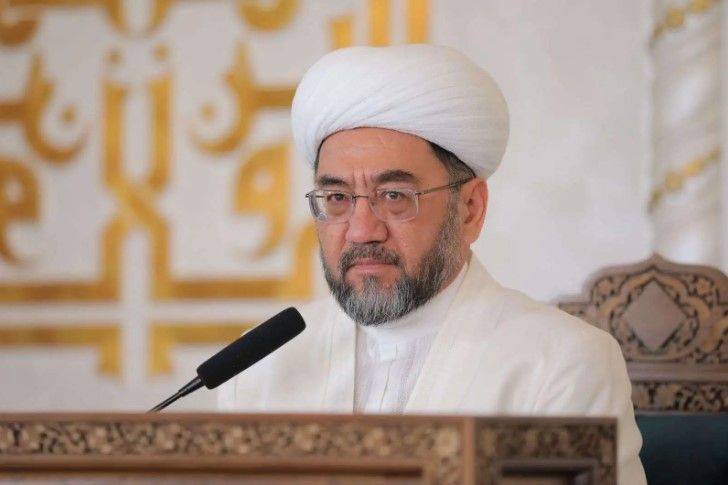
Sheikh Nuriddin Khaliqnazar

Other posts
News

Allahshukur Pashazade: As a person who considers Uzbekistan his second Homeland, I sincerely rejoice in the achievements of the brotherly Uzbek people

02.09.2026   108821   6 min.
Allahshukur Pashazade: As a person who considers Uzbekistan his second Homeland, I sincerely rejoice in the achievements of the brotherly Uzbek people

Chairman of the Caucasus Muslims Board, Sheikh-ul-Islam Allahshukur Pashazade, on the eve of the 35th anniversary of Uzbekistan’s independence, sent sincere congratulations and best wishes to the people of Uzbekistan through Dunyo IA:

— In the name of Allah, the Most Gracious, the Most Merciful.

From the bottom of my heart, I sincerely congratulate the brotherly people and state of Uzbekistan on Independence Day and offer prayers to Almighty Allah for peace, prosperity and new successes. Over the years of independence, Uzbekistan has travelled a glorious historical path and, thanks to the firm will of the courageous and noble Uzbek people, has achieved great results. Today, we are witnessing significant progress of independent Uzbekistan in the political, economic, social and spiritual spheres.

As a person who considers Uzbekistan his second Homeland and always keeps it in his heart and thoughts, I sincerely rejoice in the achievements of the brotherly Uzbek people. I would particularly like to note and highly appreciate the tireless work of the President of Uzbekistan, Shavkat Mirziyoyev, a devoted leader who is making every effort and using all his capabilities for the happiness and well-being of independent Uzbekistan and its dear people.

Under the leadership of His Excellency, over the past ten years Uzbekistan has been experiencing a period of the Third Renaissance.

Uzbekistan, which even during the years when atheism prevailed did not allow the light of Islamic enlightenment to be extinguished, today, thanks to the profound political thinking and unprecedented efforts of the head of state, has transformed into a cultural and spiritual center radiating a bright light in the Islamic world at the international level. The Center for Islamic Civilization, which is a vivid result of these tremendous efforts, can without exaggeration be called an invaluable gift from His Excellency to all Muslims of the world. The broad promotion at the international level of the rich scientific and spiritual heritage of Uzbek thinkers once again confirms the status of the Uzbek land as a center of enlightenment and spiritual knowledge that has been formed here over the centuries.

I consider every meeting and conversation with His Excellency an important and significant event for me and express my boundless gratitude for the great attention shown to me. I am proud that recently the President of Uzbekistan personally presented me with the “El-yurt hurmati” Order.

As in all spheres of our lives, further deepening of the historically established cultural and spiritual-moral ties with independent Uzbekistan is of particular importance for our peoples. The strong fraternal relations established between the President of Azerbaijan, respected Ilham Aliyev, and respected Shavkat Mirziyoyev, as well as the sincere meetings held in Azerbaijan and on Uzbek soil, are of particular value and give us spiritual and moral strength. Thanks to the efforts and wise steps of our strong state leaders, the deepening of Azerbaijani-Uzbek relations in all spheres and the elevation of our brotherhood to the level of allied relations are a source of great pride for us.

Uzbekistan occupies a special place in my heart. I rejoice immensely at every achievement of this country and always pray that it will conquer new heights. As a person who received higher religious education in Uzbekistan and was subsequently honored with the high spiritual title of Sheikh-ul-Islam in Azerbaijan and the Caucasus, I highly appreciate the attention and importance that the respected state leaders of Azerbaijan and Uzbekistan attach to our traditional national and spiritual values, as well as our historical heritage.

In this difficult period, when spiritual values are experiencing a crisis in the world, our brotherly peoples, under the leadership of wise leaders and relying on their historical and spiritual heritage, are confidently moving along the path of building a worthy future and effectively cooperating within the framework of the Organization of Turkic States. This is the mercy and benevolence of Almighty Allah manifested to us.

We express our sincere gratitude to the people and state of Uzbekistan, who were the first among the Turkic states to make their noble contribution to the restoration and revival of religious and spiritual heritage that had been subjected to vandalism, as well as to the construction and restoration work being carried out in the territories of Azerbaijan liberated from occupation.

Once again, with great pride and joy, I sincerely congratulate the brotherly Uzbek people on the 35th anniversary of the independence of Uzbekistan and wish them all the very best.

May Almighty Allah never deprive our brotherly peoples and states of His great mercy and blessings, and may He grant all of us the fulfillment of all good dreams, wishes and noble goals.

Amen!