The site is working in test mode!
19 October, 2026   |   8 Jumādá al-ūlá, 1448

Tashkent city
Fajr
05:20
Sunrise
06:39
Dhuhr
12:08
Asr
15:53
Maghrib
17:41
Isha
18:55
Bismillah
19 October, 2026, 8 Jumādá al-ūlá, 1448

Training Seminars Commenced for Female Religious Educators (Otinoyis)

02.02.2026   771516   1 min.
Training Seminars Commenced for Female Religious Educators (Otinoyis)

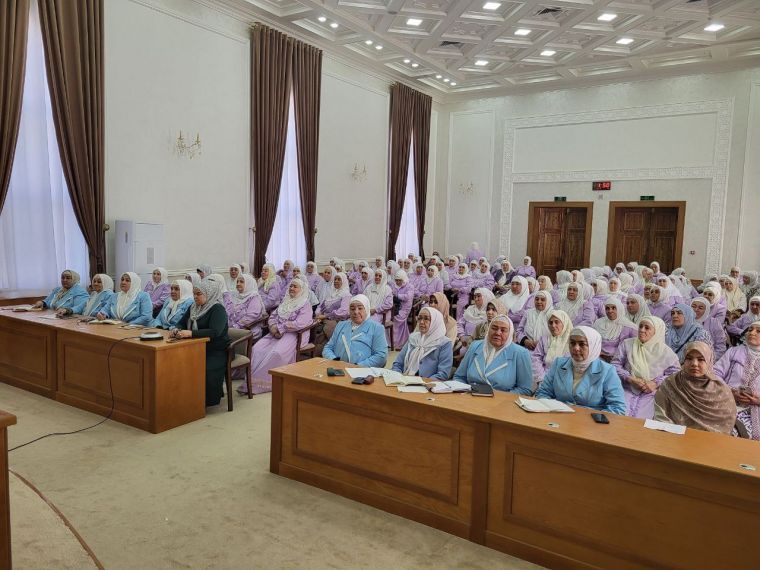
The Women's Department of the Muslim Board of Uzbekistan is conducting a series of educational seminars for "Otinoyi" (female religious educators) via the ZOOM platform. The curriculum provides comprehensive insights into Aqidah (creed), Fiqh (jurisprudence), Seerah (prophetic biography), Hadith, as well as the regulations for Mawlid events and funeral rites.

The program began with sessions dedicated to Aqidah and Fiqh. More than 2,000 participants attended the initial lecture titled "Issues of Purification in Islamic Sharia," conducted by Odinakhon Muhammad Sodiq, a senior lecturer at the "Khadichai Kubro" Women's Madrasa.

The training sessions are led by specialists from the Fatwa Center, faculty members of the Tashkent Islamic Institute named after Imam Bukhari, and educators from the "Khadichai Kubro" Secondary Special Islamic Educational Institution for Women.

Press Service of the Muslim Board of Uzbekistan

Other posts
News

“The Diplomatic Insight”: Uzbekistan combines its historical heritage with modern development

16.09.2026   111398   1 min.
 “The Diplomatic Insight”: Uzbekistan combines its historical heritage with modern development

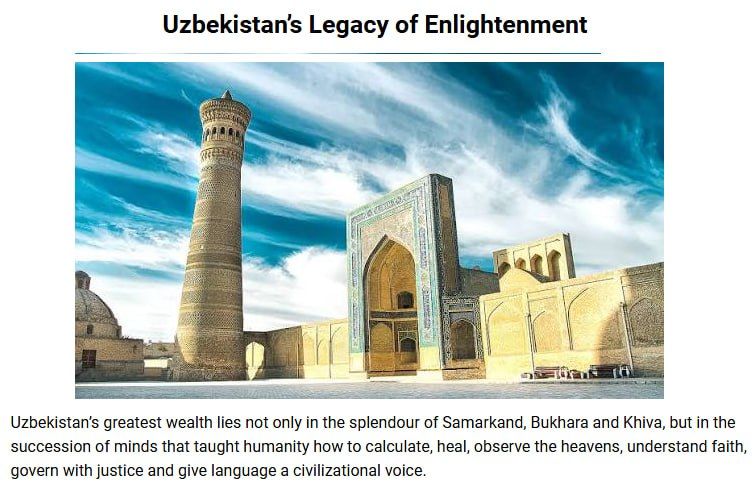
Popular Pakistani portal “The Diplomatic Insight” has published an article by Muhammad Asif Noor, Executive Director of the Institute of Peace and Diplomatic Studies, on Uzbekistan’s enlightenment heritage, reports Dunyo IA.

Author notes that the country is seeking to link its rich historical heritage with modern development. In his assessment, museums, research centers, specialized schools and cultural diplomacy are becoming part of the policy aimed at laying the foundations for the Third Renaissance.

Article also highlights the role of Samarkand, Bukhara and Khiva, as well as the heritage of Amir Temur and the Temurids. Particular attention is paid to the development of the Center for Islamic Civilization and the Imam Bukhari complex, which, as noted, bring together the preservation of historical memory, education and scientific research.

Author also emphasizes the international significance of Uzbekistan’s cultural traditions, including Shashmaqom, Lazgi, Askiya and the art of bakhshi, many of which have been recognized by UNESCO.