Uzbekistan and Pakistan expand cooperation in pilgrimage tourism
22.10.2026
180506
2 min.
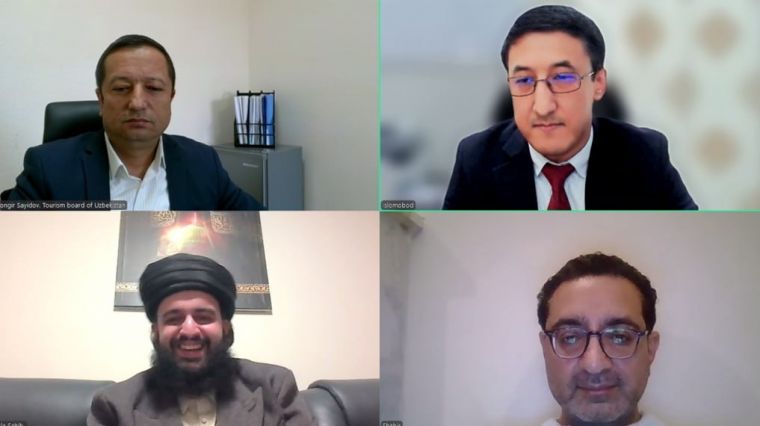
Uzbek diplomats, representatives of the Tourism Committee, and the country's Ambassador for Pilgrimage Tourism in Pakistan Shaykh Muhammad Hassan Haseeb ur Rehman, discussed prospects for expanding cooperation during an online meeting, reports Dunyo IA.
During the videoconference, parties reviewed opportunities to popularize the historical, cultural, and religious heritage of the country, as well as to expand cooperation with Pakistan in the field of pilgrimage tourism. Special attention was paid to raising awareness among Pakistani tourists about the holy sites, historical monuments and attractions of Uzbekistan.
Shaykh Muhammad Hassan Haseeb ur Rehman noted that Uzbekistan has been one of the centers of Islamic civilization for centuries. According to him, the shrines associated with the names of prominent scholars, theologians and thinkers of the Islamic world represent significant spiritual and historical interest for foreign pilgrims, including those from Pakistan.
As promising destinations, he highlighted Tashkent, Samarkand and Bukhara, which possess a rich religious and educational heritage.
During the meeting, parties also reviewed the possibility of organizing a visit of a delegation of Pakistani theologians to Uzbekistan. Within the framework of the visit, meetings are planned with the leadership of the Committee for Religious Affairs and the Muslim Board of Uzbekistan, alongside visits to Tashkent, Samarkand and Bukhara.
Pakistani side expressed particular interest in visiting the Center of Islamic Civilization in Tashkent and the renovated Imam Al-Bukhari Complex. Furthermore, the preparation of specialized video materials about these sites for distribution in Pakistan was discussed.
Following the conclusion of the meeting, participants agreed to continue the dialogue through diplomatic channels. The implementation of these initiatives is expected to contribute to strengthening cultural and religious ties between the two nations and attracting a larger number of Pakistani pilgrims to Uzbekistan.
SHARE INFORMATION ON SOCIAL NETWORKS



 Iman
 Prayer
 Fasting
 Zakat
 Haj
 Qur`an
 Lessons of Islam
 Contact