The second International online scientific-practical symosium on "The Maturidiyya Teachings and the present"
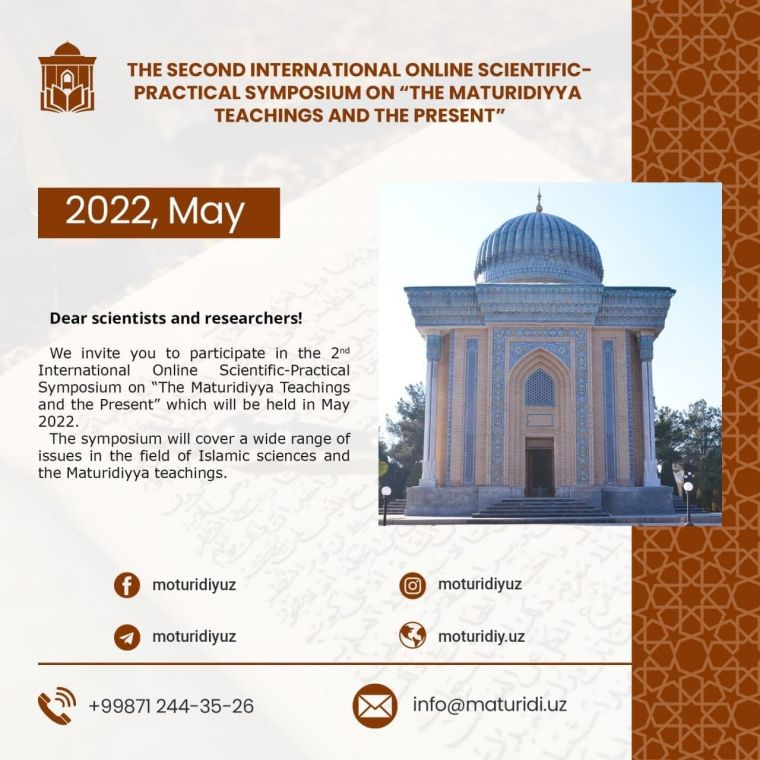
The main directions of the symposium are:
- Life and scientific heritage of Imam Maturidi;
- The Maturidiyya teachings and its history;
- The importance of the Maturidiyya teachings today;
- Issues of modern Islamic studies;
- The study of the Maturidiyya teachings today;
- Propagation of moderate Islamic teachings.
Scientists, specialists, professors, doctoral students, researchers, masters, and students from all over the world can apply to participate in the symposium.
Articles for the symposium will be accepted in Uzbek, Arabic, English, Turkish, Russian, German, French, Persian, and Urdu.
The results of the symposium will be published in the form of a scientific collection.
Those wishing to participate in the Symposium are required to submit an article annotation by February 28, 2022, to the addresses below.
Telephone: (71) 244-35-26, (71) 244-35-18;
Telegram: +998 99 803 31 41;
E-mail: info@maturidi.uz;
WhatsApp: +998 91 172 76 77
“Voice of Travel” magazine: Uzbekistan ranks among the world's top 7 fastest-growing tourism destinations
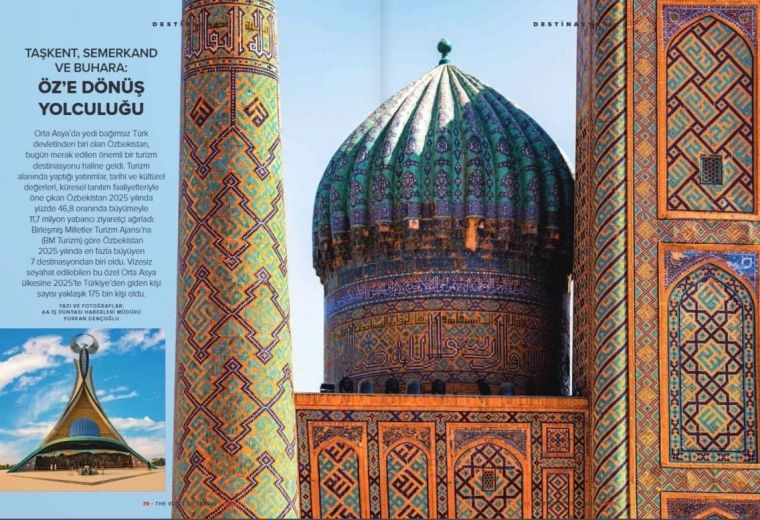
Prominent Turkish tourism magazine “The Voice of Travel” has published a featured article titled “Journey through the land of the ancestors: Uzbekistan”, reports Dunyo IA.
“Voice of Travel” stands as one of Türkiye’s leading specialized publications, distributed to thousands of travel agencies, hotels, airlines, and industry professionals nationwide. Published in both print and digital formats, the magazine is recognized as a key informational resource for stakeholders within the tourism sector.
Article highlights the rich historical and cultural heritage of Uzbekistan, its ancient cities inscribed on the UNESCO World Heritage List, and the potential for pilgrimage tourism, national customs, traditions, and unique national cuisine, alongside the reforms implemented in the country to develop the tourism sector.
Furthermore, the publication extensively covers the modern tourism infrastructure of Uzbekistan, the expansion of the international airline network, the improvement in the quality of hotel and hospitality services, as well as opportunities in areas such as cultural, gastronomic, eco-tourism and pilgrimage tourism.
