The site is working in test mode!
08 January, 2026   |   19 Rajab, 1447

Tashkent city
Fajr
06:24
Sunrise
07:49
Dhuhr
12:35
Asr
15:30
Maghrib
17:15
Isha
18:33
Bismillah
08 January, 2026, 19 Rajab, 1447

On telephone conversation of Presidents of Uzbekistan and Turkey

27.02.2018   22545   2 min.
On telephone conversation of Presidents of Uzbekistan and Turkey

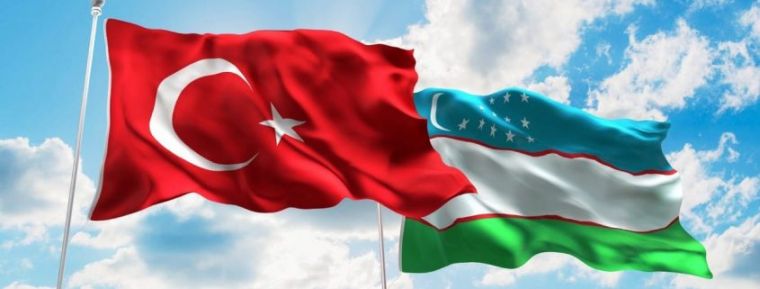
On February 26, the President of the Republic of Uzbekistan Shavkat Mirziyoyev had a telephone conversation with the President of the Republic of Turkey Recep Tayyip Erdogan. 

President Shavkat Mirziyoyev, sincerely congratulating President Recep Tayyip Erdogan on his birthday, emphasized his efforts and great contribution to the development of friendly relations and strategic partnership, strengthening of mutually beneficial cooperation between Uzbekistan and Turkey. 

During the conversation, the heads of the two states noted with deep satisfaction that fruitful meetings and negotiations within the framework of the high-level visit to the Republic of Turkey in October 2017 created a solid basis for further development of multifaceted and mutually beneficial bilateral cooperation and gave it concrete practical content. 

President Recep Tayyip Erdogan expressed his sincere gratitude to President Shavkat Mirziyoyev for his congratulations and good wishes. He emphasized that in the person of the President of Uzbekistan he had found a true friend and like-minded person in comprehensive strengthening of Uzbek-Turkish cooperation. 

The sides agreed to fully implement concrete arrangements reached and agreements signed following the historic visit, including major joint projects in trade, investment, banking, finance, transport, tourism and other important spheres. 

It was noted that it is important to organize a regular meeting of the Intergovernmental Joint Commission on trade and economic cooperation in order to discuss issues of preparation for the upcoming visit of President Recep Tayyip Erdogan to the Republic of Uzbekistan and implementation of previous agreements. 

During the conversation, the heads of the states considered in detail the prospects for further expansion of Uzbek-Turkish cooperation and exchanged views on current issues of the regional and international agenda. 

At the end of the conversation, the heads of the states confirmed their readiness to comprehensively develop and strengthen the traditionally friendly ties and close cooperation between Uzbekistan and Turkey. 

 
UzA
Articles
Other posts

The Central Bank forecasts the emergence of at least 10 Islamic banks by 2030

28.10.2025   23318   4 min.
The Central Bank forecasts the emergence of at least 10 Islamic banks by 2030

The Central Bank expects to establish at least 10 full-fledged Islamic banks by 2030. Also, “Islamic windows” — branches providing Sharia financial services — will appear in three state banks. The Central Bank considers Islamic finance as a tool for withdrawing funds from the shadow economy.

Why is this important

According to a UNDP survey, 68% of Uzbekistan’s population does not want to use traditional banking services due to religious beliefs. Launching Islamic banks will expand financial inclusion, increase bank assets, and reduce the share of the shadow economy. This is the largest transformation of the financial system since independence.

What happened

  • The Central Bank forecasts the emergence of at least 10 Islamic banks by 2030;
  • Three state banks (not yet defined) will create “Islamic windows”;
  • CB Deputy Chairman Abrorhuja Turdaliyev called Islamic finance a tool for bringing funds out of the shadows;
  • In September, the Legislative Chamber approved the law on Islamic banking activities in the first reading;
  • UNDP Survey: 68% of the population and 60% of businesses do not use traditional banks due to their religious beliefs.

Draft law

The document introduces the concepts of “Islamic banking activity”, “Islamic financial operations”, “investment deposit”, and others. A separate license is provided for Islamic banks. Classical banks will be able to organize “Islamic windows” if they have a license.

Islamic products: Murabaha (deferred trade financing), Mudaraba (investment partnership), Mushoraka (joint venture), Wakala (agency financing), Salam (prepayment of goods).

Features of regulation

  • Islamic banks will be able to conduct direct trade activities, establish legal entities, and acquire shares in the authorized capital without restrictions;
  • Islamic Finance Councils (Sharia Councils) will be established under the Central Bank and banks;
  • Notarial acts of Islamic banks are exempt from state duty;
  • A separate tax regime may be introduced, taking into account the specifics of Islamic finance.

Assessment of demand

The Deputy Chairman of the Central Bank clarified: when we talk about 50-60% of the population preferring Islamic finance, we are talking about those who prefer it. Those who categorically refuse traditional services are significantly fewer.

Context

Islamic finance prohibits the collection of interest (riba) and speculative operations. Instead, partnership models are used, where the bank and the client share profits and risks. Uzbekistan is a predominantly Muslim country (90%+ of the population), where a significant portion of citizens avoid traditional banks for religious reasons.

Creating 10 Islamic banks by 2030 is an ambitious task, given that there are currently around 35 commercial banks operating in the country. “Islamic windows” in state banks will allow large players (Uzpromstroybank, Halyk Bank, Asaka Bank) to enter a new segment of clients without creating separate structures.

The Central Bank sees Islamic finance as a tool for combating the shadow economy: religiously motivated citizens who do not trust traditional banks will be able to legalize funds through Sharia products.

A separate tax regime may include benefits for Murabaha-type operations, where the bank formally purchases goods and resells them to the client with a markup — to avoid double taxation.