Hateem Praying Timings at Masjid al-Haram (Male and Female)
03.11.2025
72720
2 min.
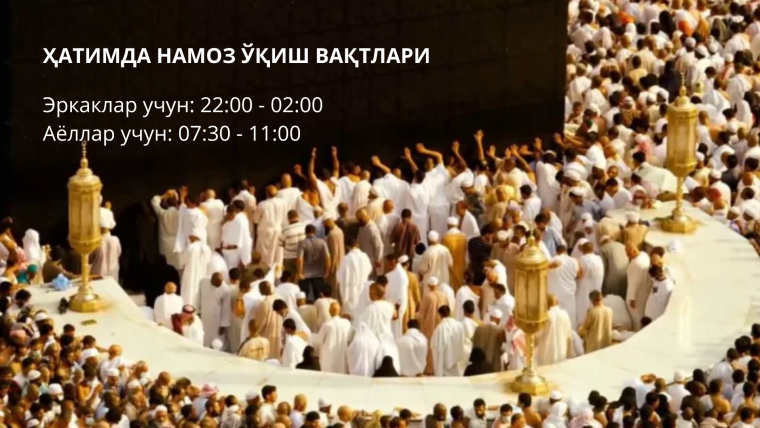
Hateem is also known as Hajr Ismail, it has separate prayer timings for both male and female pilgrims.
The Hateem (also known as Hajr Ismail), a sacred area within Masjid al-Haram in Makkah, is considered part of the original Kaaba structure, making it one of the most sought-after spots for worshipers.
Access to this sacred area is carefully regulated to ensure orderly conduct and provide equal opportunities for both men and women to offer prayers.
Men’s Prayer Timings
Men can perform their prayers in the Hateem during the evening hours, from 10:00 PM to 2:00 AM. This time frame allows worshipers to engage in their spiritual practices without the heavy crowds that often gather later in the day.
Women’s Prayer Timings
Women have their designated prayer time in the morning, from 7:30 AM to 11:00 AM.
It is important to note that these timings can vary slightly due to various operational reasons, such as cleaning, maintenance, or other unforeseen circumstance
Duration
Entrance
For instance, there have been instances where the Hateem was opened later than the scheduled time, as seen when it opened at 7:30 AM instead of 8:00 AM due to cleaning activities.
The Hateem is believed to be a part of the original Kaaba built by Prophet Ibrahim (Abraham). Praying in the Hateem is considered highly meritorious, and many pilgrims make it a point to include this in their pilgrimage rituals.
For those planning to visit the Hateem, it is advisable to check for any updates on timings to ensure a smooth and fulfilling experience.
SHARE INFORMATION ON SOCIAL NETWORKS



 Iman
Iman  Prayer
  Fasting
  Zakat
Zakat  Haj
Haj  Qur`an
  Lessons of Islam
  Contact
